


OmniGenT
OmniGenT is an open meta-harness for composing, sandboxing, and collaborating on AI agent sessions across Claude Code, Codex, Pi, and custom YAML-defined agents.
Overview
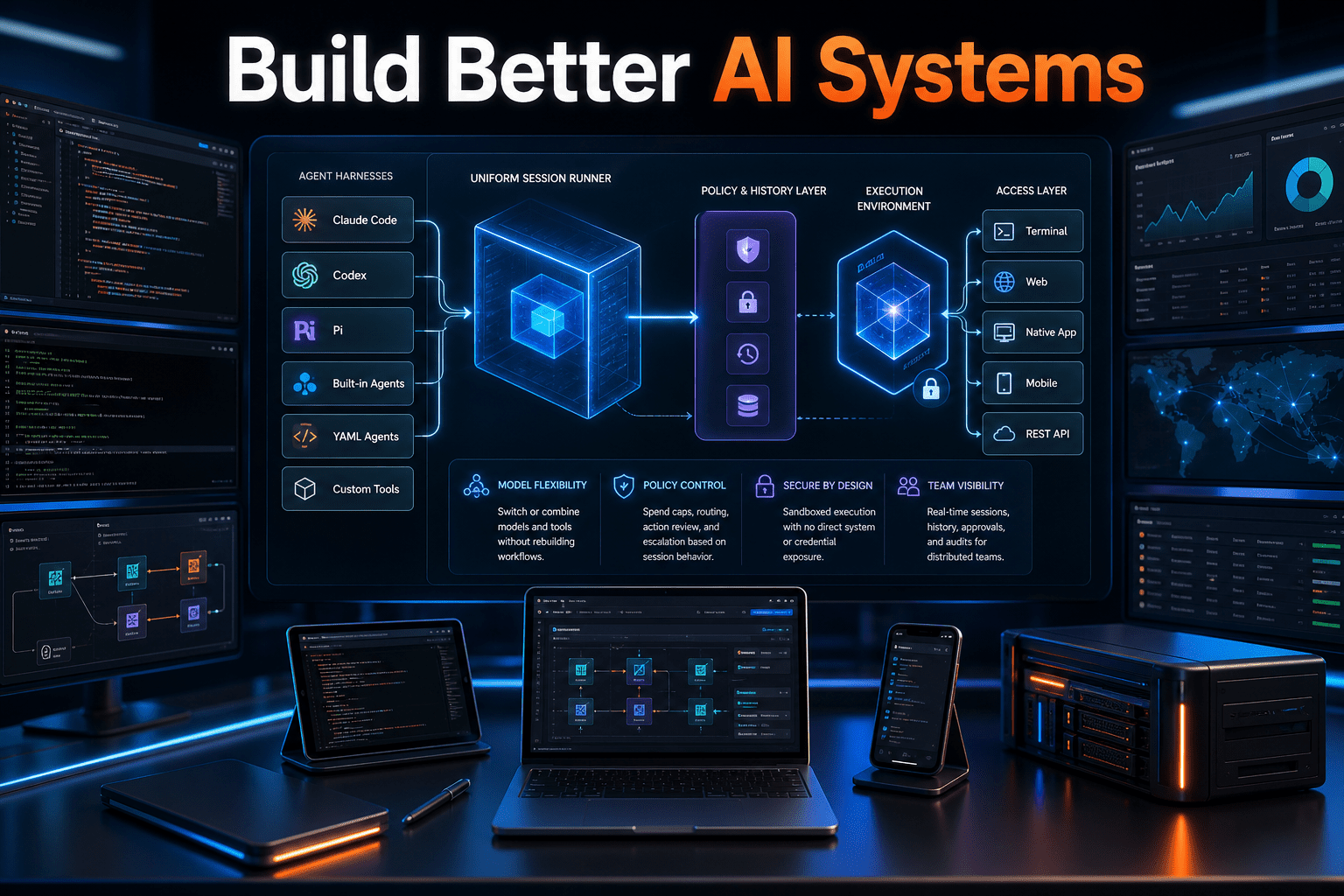
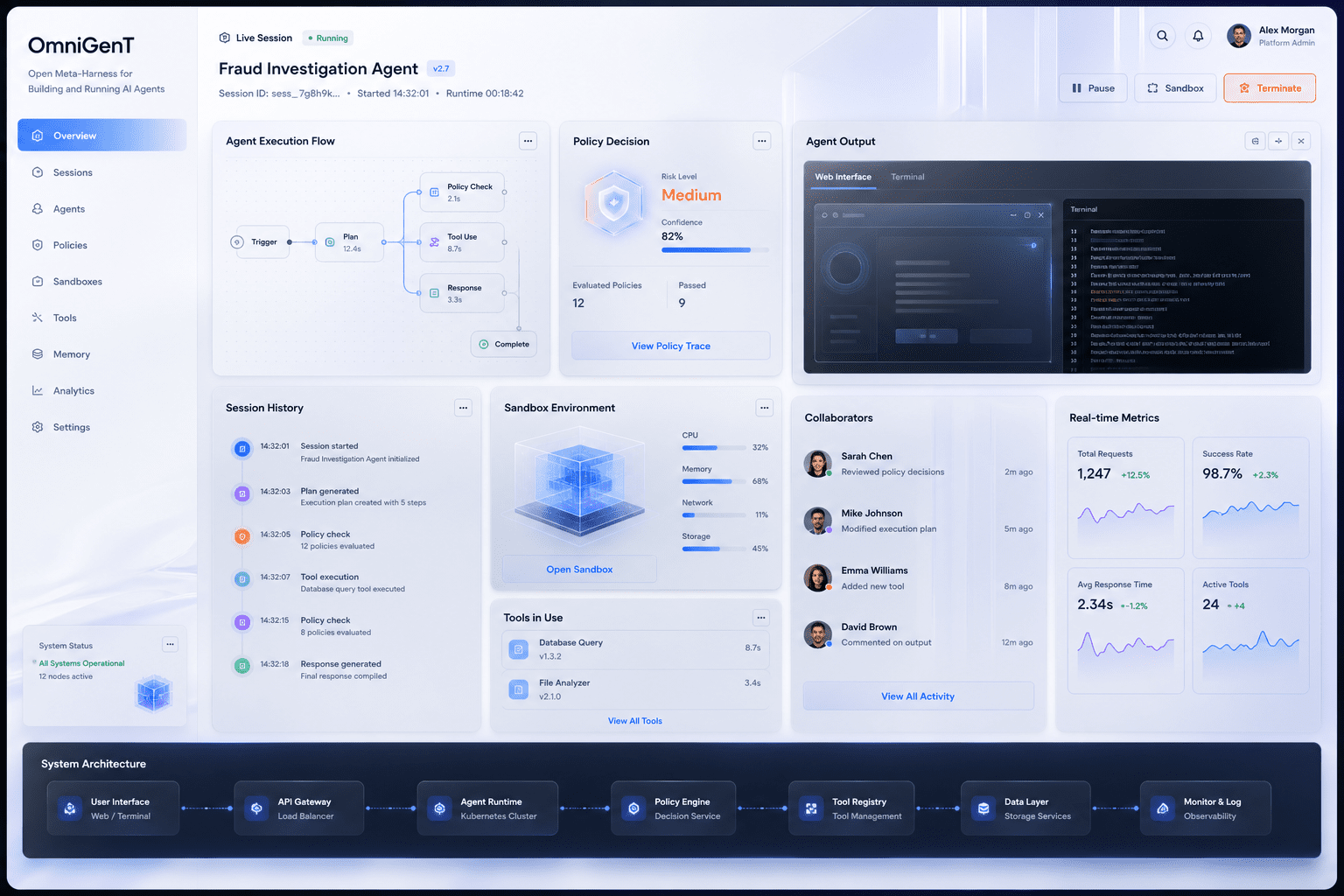
Users start an OmniGenT session by selecting an agent harness, model setup, or YAML-defined agent, then run it through a common runner that records activity and applies configured controls. Sessions can be shared over a URL so collaborators can inspect history, comment, and guide the same agent workflow in real time.
Agent composition with policy controls
The product is aimed at engineers, platform teams, research groups, and technical operators who are already testing agentic development workflows but need repeatability, observability, and team review. It fits coding orchestration, model comparison, internal automation, and collaborative debugging scenarios where multiple people need to inspect the same agent session instead of relying on isolated terminal histories.
- Compose multiple agent harnesses behind one runner so teams can switch models and tools without rebuilding surrounding workflows.
- Define custom agents in YAML alongside built-in multi-agent options for coding orchestration and structured model debate.
- Apply stateful policies for spend caps, model routing, action review, and escalation based on session behavior.
- Constrain agent execution with sandbox rules that restrict filesystem access, network access, and credential visibility.
- Share live sessions through URLs with persistent history so collaborators can review, comment, and steer together.
Where OmniGenT fits
Technical architecture
OmniGenT is available as an alpha project with documentation, API references, a macOS app, and installer options that include uv, pip, Homebrew, and a shell install script. Developers can begin from the command line, explore built-in agents, then add custom YAML agents or connect supported external harnesses. Teams that want collaboration and controls can run the server component to provide policy enforcement, shared history, and multi-interface access. Because the project is early-stage, evaluators should treat it as infrastructure to test carefully before relying on it for sensitive production automation.
OmniGenT treats agent execution as shared infrastructure: composable at the harness layer, governed by policy, and observable across team interfaces.
Getting started
OmniGenT is most interesting for teams that want to experiment with agentic development while preserving control over how agents run, what they can access, and who can observe the work. Its combination of composable harnesses, policy enforcement, sandboxing, and real-time collaboration makes it a pragmatic control plane for early agent infrastructure evaluation.
Open the tool and review its core product experience.
Create your account or access your existing workspace.
Use your own task to judge speed, quality, and fit.
Check similar AI tools before making a final decision.
OmniGenT
OmniGenT is built by members of the Databricks AI team and Neon, bringing experience from applied AI systems, developer infrastructure, and database-oriented engineering. The project is developed in the open with an Apache 2.0 license and is aimed at practical agent runtime control rather than another standalone chatbot interface.
OmniGenT provides a common control layer for running AI agents without locking teams into one model, coding harness, or interface. It wraps agents in a uniform session runner, adds a server-side policy and history layer, and exposes live sessions through terminal, web, native app, mobile, and REST API access. Engineers can switch or combine Claude Code, Codex, Pi, built-in agents, and their own YAML agents while keeping cost, credential exposure, filesystem access, and network behavior under centralized control. The project is positioned for teams experimenting with agentic coding and automation workflows that need stronger operational guardrails than prompt-only instructions. It is still alpha, but its Apache 2.0 release, documentation, installer paths, and collaborative session model make it useful for technical users evaluating practical agent orchestration infrastructure.
omnigent.ai/
Comments (0)
No Comments Found