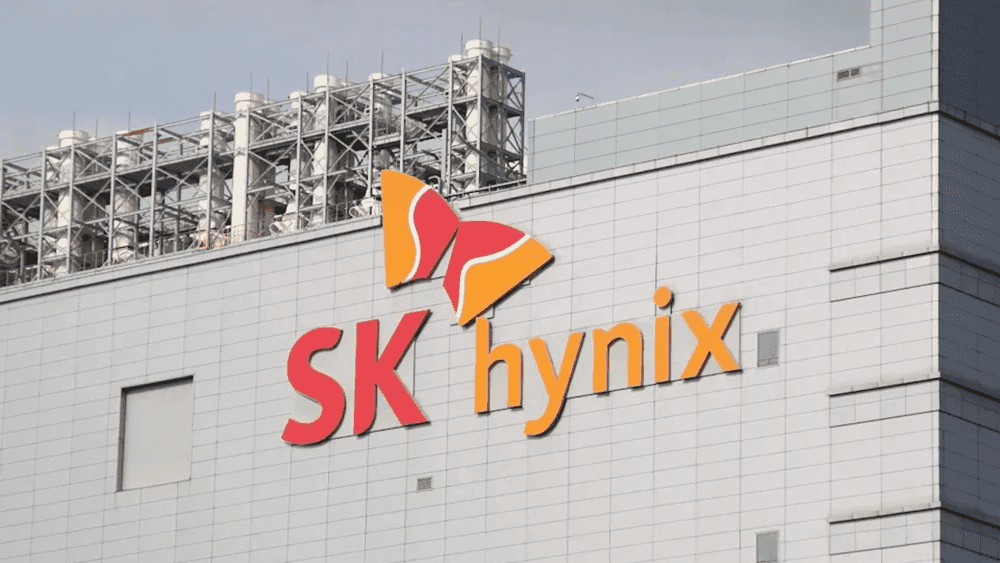
SK Hynix’s planned U.S. ADR listing shows how high-bandwidth memory has become one of the most investable parts of the AI infrastructure boom.
SK Hynix’s planned U.S. listing is one of the clearest signs that AI memory has moved from a specialist semiconductor topic into the center of the AI investment story. The company is not simply riding a chip cycle; it is positioning itself as a core supplier to the infrastructure that makes frontier AI possible.
The market’s attention has often focused on GPUs and model companies, but high-bandwidth memory is one of the constraints that determines how much AI compute can actually be deployed. Without enough HBM, even advanced accelerators can be limited by data movement, packaging capacity and supply allocation.
A major U.S. ADR listing gives global investors a more direct way to express a view on AI memory demand. It also gives SK Hynix another route to fund factories, advanced equipment and capacity expansion at a time when AI data centers are consuming more of the world’s premium memory supply.
Why SK Hynix matters to the AI stack
SK Hynix has become one of the most important suppliers in the HBM market, where memory is stacked close to AI processors to provide the bandwidth required for large-scale model training and inference. This makes the company strategically relevant to the AI infrastructure race, even though it does not sell consumer-facing AI tools.
For AI systems, memory is not a passive component. It affects throughput, latency, power efficiency, accelerator utilization and the economics of serving large models. As models grow more multimodal, longer-context and agentic, memory bandwidth becomes even more important.
The listing is about investor access and capacity
A U.S. ADR listing can make SK Hynix easier for global investors to buy, especially those that want exposure to AI infrastructure but do not directly trade Korean equities. That matters because memory suppliers are becoming part of the AI public-market narrative alongside GPU makers, cloud platforms and power-infrastructure companies.
The proceeds are also strategically important. AI memory expansion requires capital-intensive factories, advanced lithography equipment, packaging capability and long lead times. If demand keeps rising, access to public-market capital can become a competitive advantage.
HBM is turning memory into AI infrastructure
Traditional memory cycles were often treated as boom-and-bust commodity markets. AI is changing that perception because HBM is closely tied to the most valuable compute workloads in the world. The more AI clusters scale, the more premium memory becomes a strategic input.
This does not remove cyclicality, but it changes the investor question. Instead of asking only whether memory prices are rising, markets are asking which suppliers can capture long-term demand from AI accelerators, hyperscaler data centers and frontier model training.
The risk: AI memory demand is still a cycle
The biggest risk is that investors treat AI memory as a one-way trade. Memory markets can still face oversupply, pricing pressure, customer concentration, export controls, packaging bottlenecks and sudden changes in cloud spending plans.
SK Hynix’s listing may broaden access, but it also exposes the company to global AI-market sentiment. If investors become more skeptical about AI capex, memory stocks can move sharply even when long-term demand remains strong.
What this means for AI tool users
NexusAI users do not need to trade memory stocks to care about this story. HBM supply affects the cost and availability of the infrastructure behind AI tools. If memory supply tightens, cloud capacity can become more expensive, rate limits can remain restrictive and smaller AI vendors may struggle to access enough compute.
The signals to watch are HBM capacity expansion, customer concentration, Nvidia and cloud-provider demand, advanced packaging availability, data-center capex, and whether memory supply growth eventually reduces the cost of training and serving frontier models.