
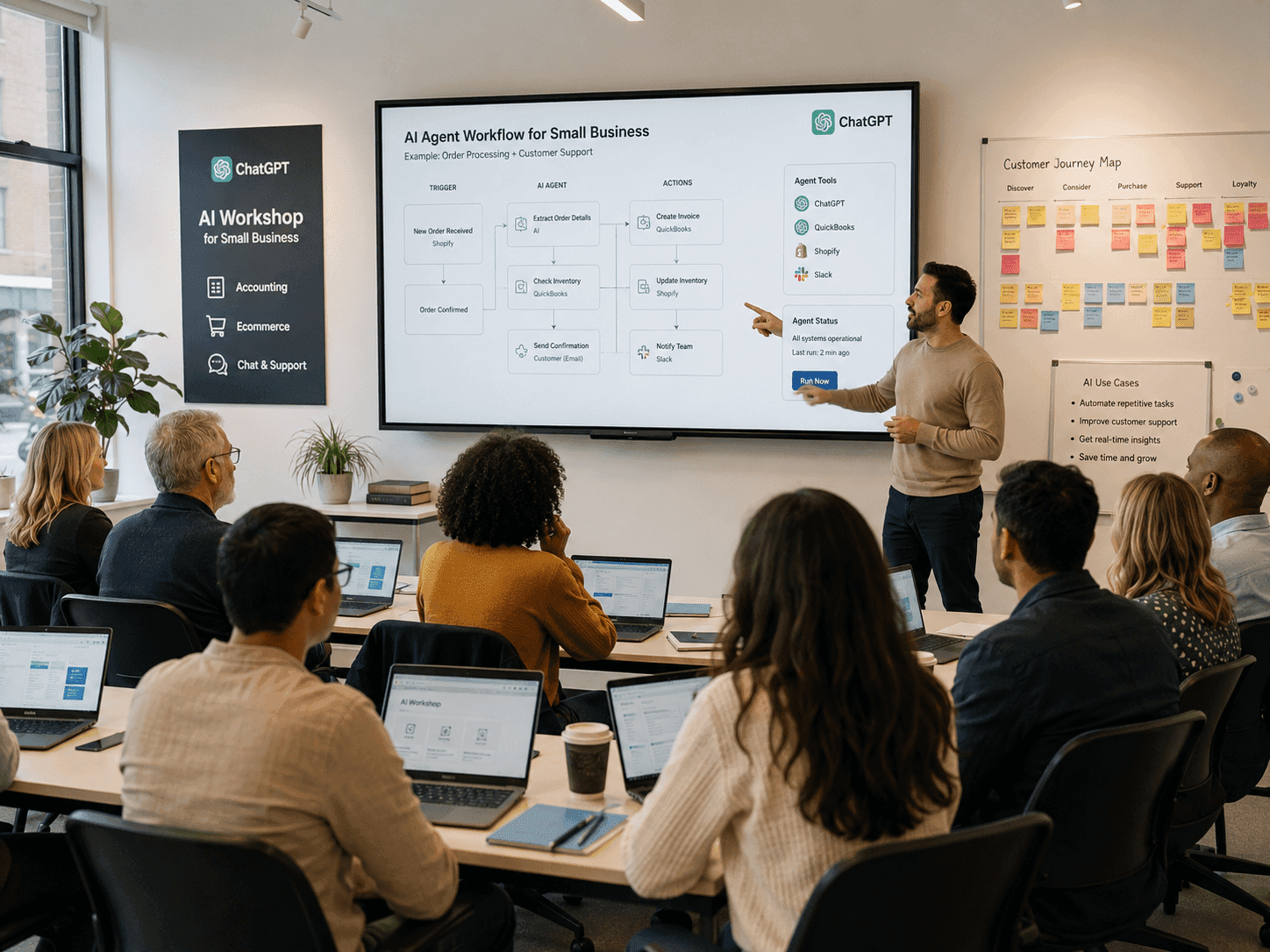
Most small businesses don’t lack AI interest—they lack the time, skills, and scaffolding to make AI do real work. OpenAI’s new program responds by bundling training, live academies, workflow templates, and a curated partner ecosystem into a single on-ramp. The message is clear: adoption is a change-management problem. Rather than market yet another model upgrade, the company is focusing on the blocking and tackling that moves the needle—mapping tasks, building prompts and automations around the tools owners already use, and helping teams practice until it sticks. That combination increases the odds of reliable wins within a quarter, which is what lean operators require to keep investing.
The program’s design reflects where ROI actually shows up in SMBs: repeatable, narrow workflows across finance, marketing, and operations. Think invoice triage, product copy refreshes, inventory insights, and CRM hygiene. By offering guided sessions and ready-made patterns, the initiative shortcuts months of trial-and-error. The curated partner list matters too—integrations with storage, commerce, accounting, and team tools mean fewer brittle handoffs. When an AI agent can read a price list, update a storefront, draft emails, and post to Slack without exporting CSVs, the burden moves from glue code to governance and measurement. That’s an adoption unlock, not a demo flourish.
For founders and operators, the play now is to run a 90-day sprint: select two critical processes with clear metrics (hours saved, error rate, time-to-publish, cash collection cycle); implement an agent-enabled path using current systems; train staff with role-specific prompts; and review weekly outcomes. The goal is not perfection—it’s a stable baseline you can scale. Vendors supporting SMBs should meet this moment with packaged presets, prebuilt connectors, and audit trails that make buyers comfortable. Investors should watch for tooling that standardizes handoffs, permissions, and observability across agents. The next phase of growth will be won by teams that productize workflows, not just showcase models.