

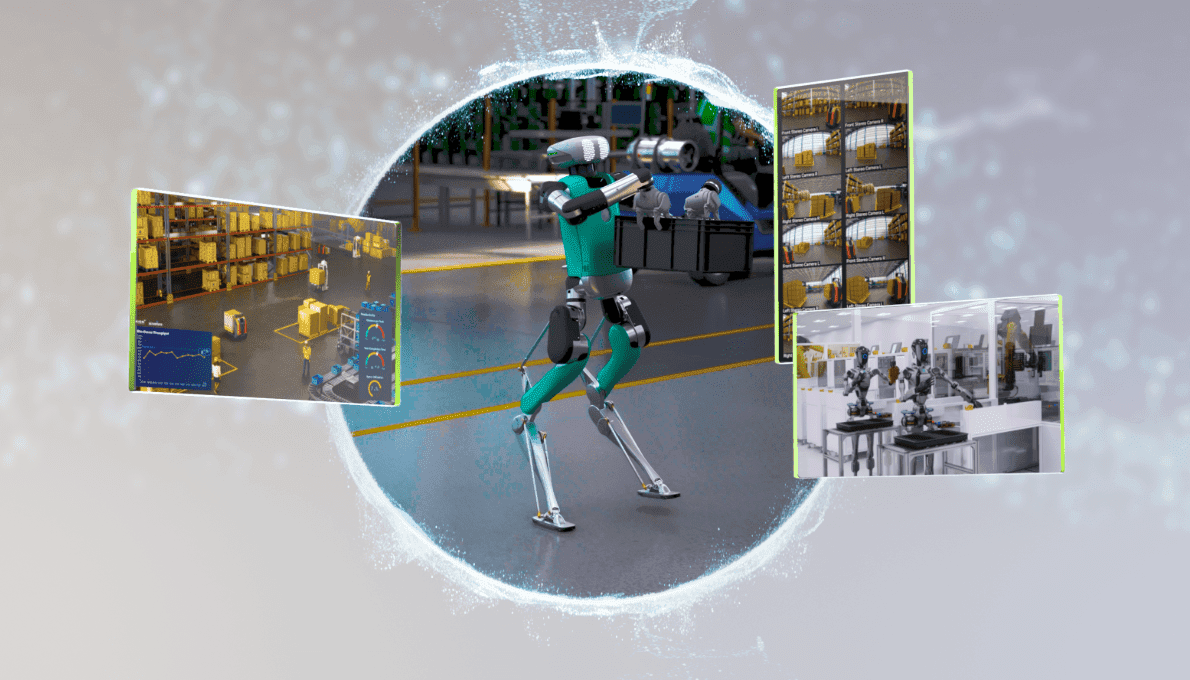
Most 3D stacks were built for visualization, not the rigor physical AI demands. Omniverse reframes the stack around OpenUSD as a shared source of truth, then layers RTX rendering, GPU physics, sensor simulators, and validation so scenes can become executable testbeds. The practical win for robotics, industrial twins, and AV perception is auditability: agents and humans can inspect the same USD structure, trigger standardized renders or sensor passes, and attach evidence to each iteration. That turns scene preparation, preflight, and simulation into repeatable, reviewable steps—closing the loop between design, testing, and data generation.
Treat Omniverse as a set of libraries and skills rather than a monolith. Teams can integrate USD operations to normalize assets, apply materials and semantics, attach colliders and joints, and register sensor rigs (cameras, lidar, radar). Physics checks then validate dynamics and contacts before launching scenario sweeps. Agent‑ready workflows are particularly effective: an agent inspects scene graphs, runs photon/RTX renders for visual preflight, executes sensor passes to produce modality‑accurate datasets, and raises issues with concrete attachments—like collision anomalies, mis‑scaled assets, or sensor occlusions—so reviewers can accept or route fixes quickly.
Operationalizing this requires discipline around acceptance gates and cost. Define SimReady criteria (scale, units, materials, physics, semantics, sensor layouts) and enforce pass/fail before expensive sweeps. Map workloads to the right infrastructure: workstation RTX for interactive authoring and preflight; OVX or cloud GPUs for batch sensor generation, physics‑heavy runs, and large scenario matrices. Use blueprints and sample labs to de‑risk first integrations, then modularize: keep your differentiated UI and business logic, surface Omniverse capabilities as callable services, and add observability so agents always return evidence your auditors—and customers—will trust.