

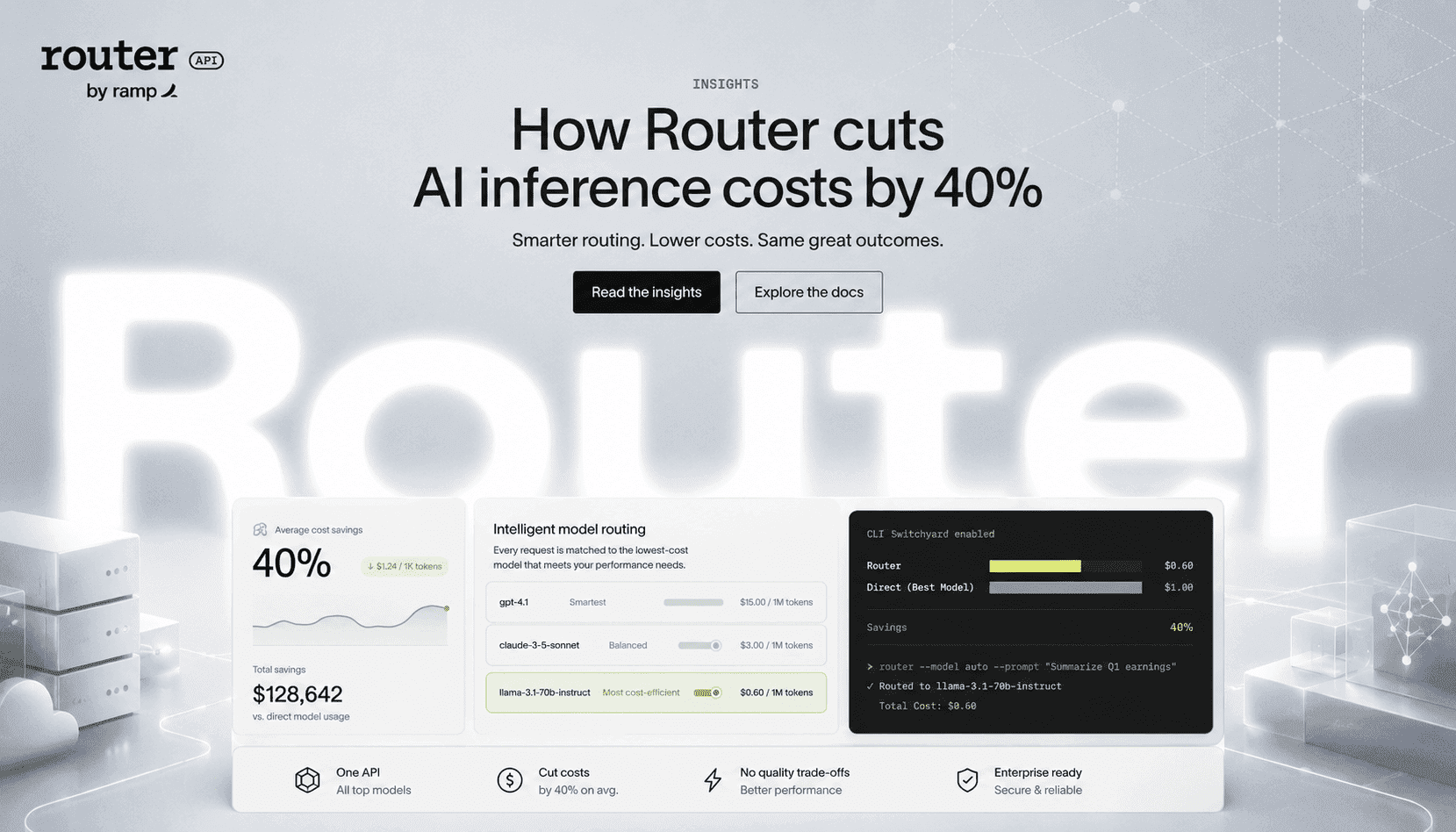
Router reframes LLM selection as an operational optimization problem. Instead of binding an application to a single vendor contract, teams call a unified API and let routing strategies balance quality, latency, and cost per request. Under the hood, this approach leans on difficulty estimation, provider-specific constraints, and benchmark-informed choices. The practical upside: resilience when a model degrades or a provider throttles, and the ability to shift spend to cheaper tiers without shipping code changes. The more ambitious promise is sustained performance: if your tasks drift, routing logic can follow, closing the loop with dashboarded metrics on token spend, tail latency, fallbacks, and acceptance rates.
What differentiates Router from a generic pass-through is strategy depth and operational scaffolding. Users can bias for flexible usage tiers, prioritize providers by targeted benchmarks, or escalate only hard problems to premium models while keeping routine traffic on cost-efficient options. Combined with A/B testability, this enables continuous tuning: measure task-specific success (e.g., extraction accuracy, code compile rates), enforce token and latency budgets, and let the router move traffic accordingly. In practice, this reduces the need for frequent model re-selection cycles and creates redundancy against provider incidents or unexpected regressions.
Governance and scope are the key caveats. Router records inputs/outputs by default unless teams opt out, so privacy reviews and PII redaction policies must be in place. The rollout is currently U.S.-only, which complicates multinational deployments that require regional data residency or consistent latency across geographies. And while the model menu spans major labs, breadth may lag specialist gateways. Buyers should examine exportability of logs, audit trails, and how routing decisions are explained for regulated workflows. The immediate benefit is better control over the cost-latency-quality frontier; the diligence burden is ensuring your compliance posture and provider terms are aligned.
A pragmatic adoption plan: baseline your current tasks and costs for two representative workloads (e.g., structured extraction and multi-step reasoning). Define SLOs and budgets, then pilot Router with one benchmarked strategy plus an escalation policy for difficult cases. Wire alerts on spend spikes, p95 latency, and fallback rates. If routing lifts task success by 3–10% while holding or cutting unit costs, expand to additional tasks. If you operate sensitive data, enable strict retention controls and apply PII masking upstream. Keep an exit path: export logs, document routing policies, and maintain a minimal direct-vendor path for critical incidents.