

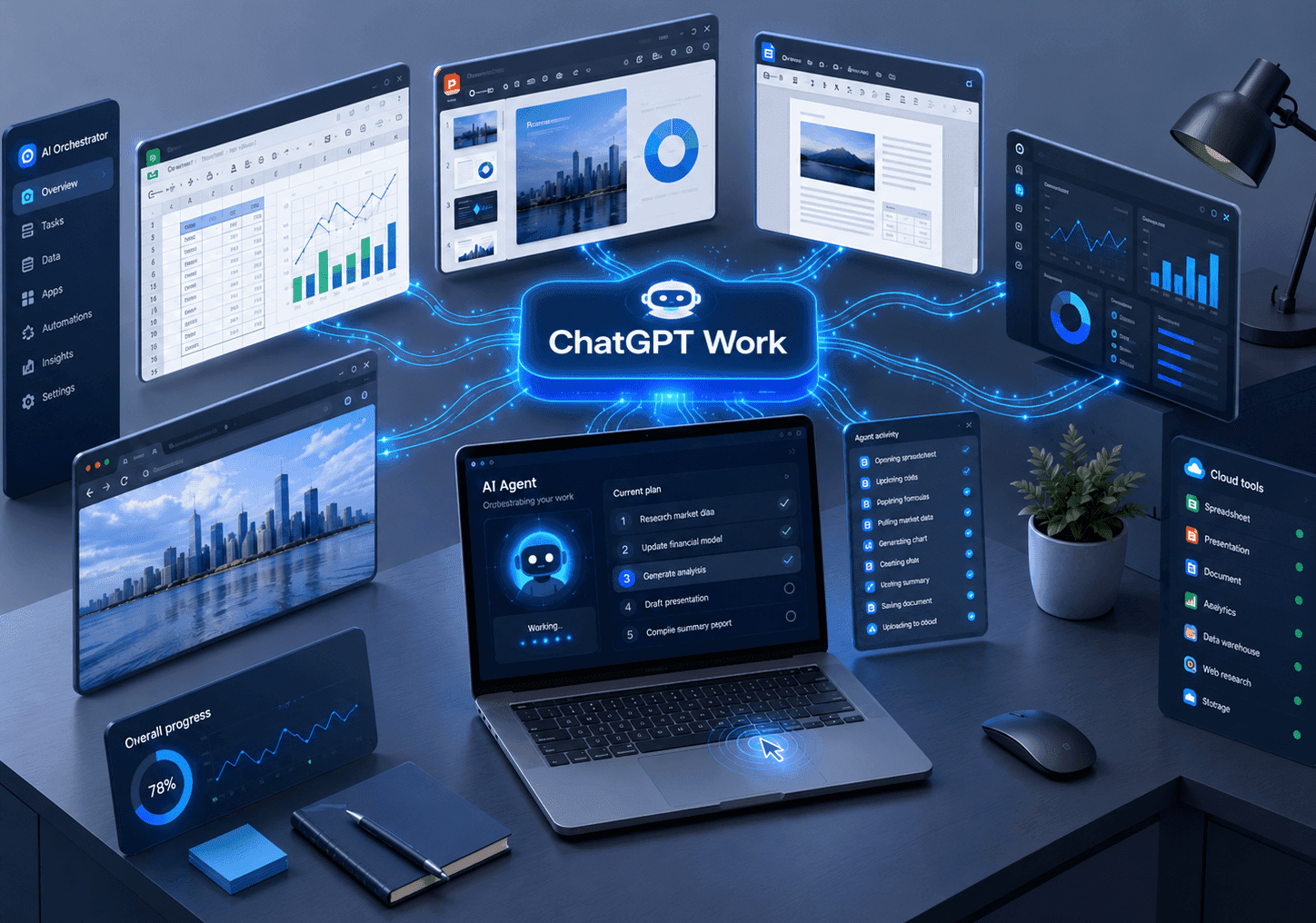
ChatGPT Work reframes AI from a conversational assistant into a digital worker that can persist on a job for hours, operate across connected apps and files, and produce finished outputs. Instead of answering a question and stopping, it decomposes goals into steps, iterates, and checks back only when decisions or approvals are needed. The shift matters because it changes where value shows up: not in chat windows, but in deliverables—decks, sheets, documents, dashboards, and even lightweight sites—that land in your repo or workspace with traceable steps and references.
Under the hood, ChatGPT Work combines a plugin directory that reaches CRMs, storage, calendars, and trackers with a built-in browser for fresh context, computer-use on desktop to click and type across local apps, and a Sites capability for interactive dashboards or project hubs. Scheduled Tasks keep work moving with time- or event-based triggers. The agent carries context across steps, follows templates and reference files, and can refine drafts in the background while you stay in control via approvals and status checks.
Early enterprise patterns are emerging. Finance teams reduce close and forecasting time by letting the agent locate source data, reconcile it into Sheets or Excel, and generate variance explanations and slides for review. Product and marketing leads turn research into briefs, assets, and localized variants while preserving brand templates. Sales operations teams maintain live account plans, clean handoffs, and executive dashboards without weekly spreadsheet marathons. The common thread is repetitive, multi-step knowledge work with clear inputs, templates, and acceptance criteria that benefit from continuity and auditability.
Execution power raises stakes for governance. Enterprises need explicit scopes for what the agent can access and when it must seek approval, plus observability into actions, drafts, and data flows. Treat ChatGPT Work like a new class of user with permissions, spend controls, and policy checks. Start with high-signal, low-risk workflows; measure time-to-output, revision cycles, and error rates; and promote only those automations that sustain quality under load. The payoff is compounding: once a workflow is captured in templates, schedules, and sites, the agent can run it reliably and scale it across teams.