

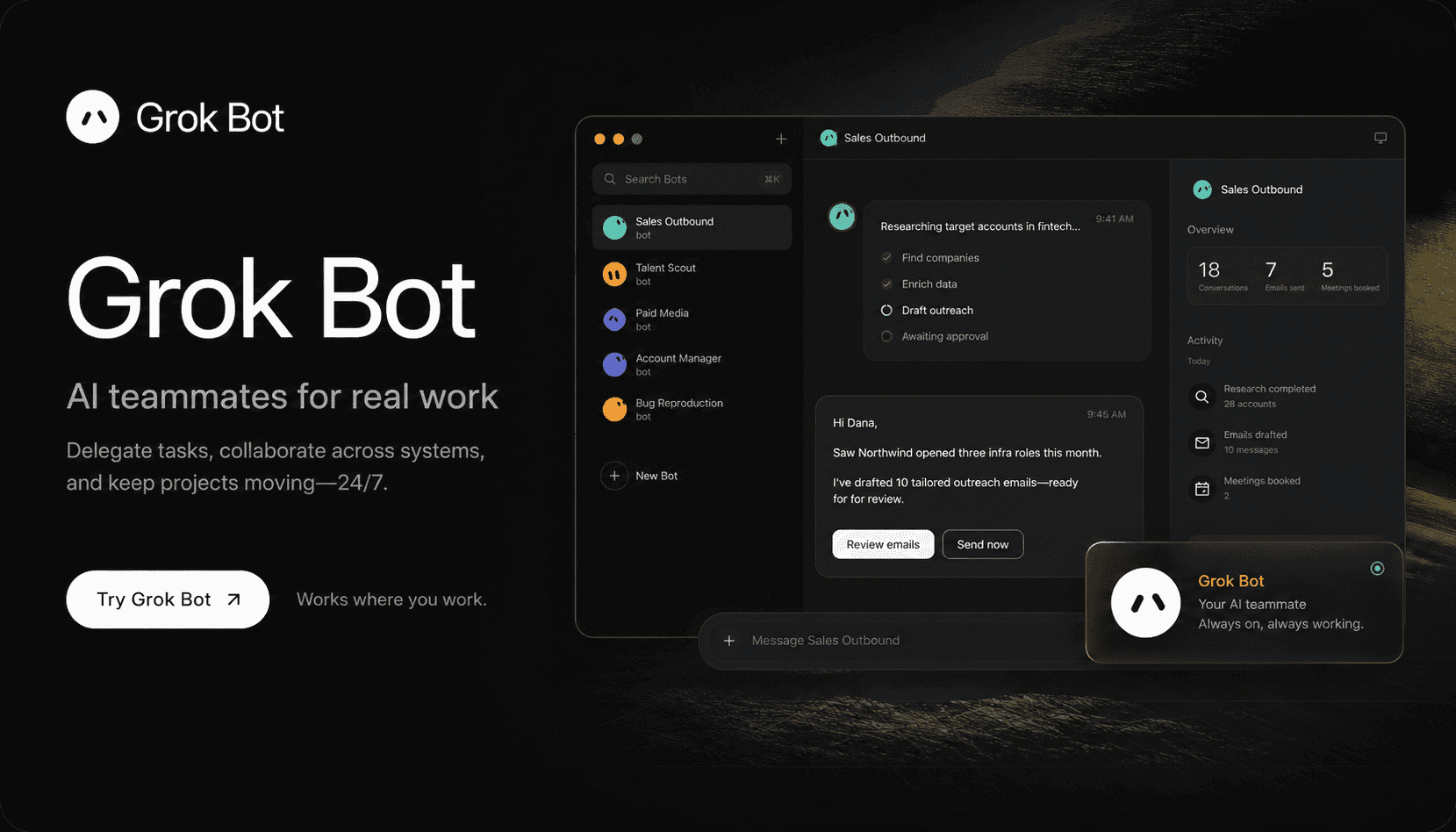
Most assistants still live in chat, where they suggest next steps but rarely ship finished work. Grok Bot flips that script by giving each bot a dedicated computer, persistent context, and the ability to log into the same SaaS tools you use. Instead of a prompt exchange, you get a teammate that records a workflow as a reusable routine, runs it on schedule, collaborates with other bots when parallelization helps, and only pings you for sign‑off. The shift isn’t cosmetic; it’s the difference between a typing aid and a junior analyst who navigates UIs, reconciles data across systems, and returns with artifacts ready for review.
This model directly targets the messy middle where RPA often breaks and chat assistants can’t act: variable UI steps, multi-app handoffs, and context that stretches across weeks. By learning from demonstration and keeping memory, a bot can handle edge cases that defeated brittle selectors. Because bots work in parallel and persist when your laptop is closed, you can assign a sales researcher, a support triager, and a reporting analyst to run overnight. That changes throughput math: instead of token usage tied to conversations, you manage a fleet’s capacity, schedules, and SLAs—closer to workforce planning than prompt engineering.
Execution power demands enterprise controls. Treat each bot as a first-class identity with least‑privilege access, SSO, and secrets stored in a vault. Push approvals to the point of risk: drafts auto‑approve; customer‑visible changes and financial entries require human review. Log every action with replayable context for audit and incident response. Keep memory scoped: let a bot remember account nuances and UI quirks, but fence off PII and sensitive notes by role and purpose. Finally, plan for breakage—UIs change and models drift—by maintaining a library of routines with versioning, tests, and owners, just like software.
For buyers, the practical frame is build‑and‑buy. You’ll buy the agent runtime and orchestration, but you must still design the operating model: identity, approvals, exceptions, and metrics. Start where the payoff is provable—support queue actions, outbound research, QA checks, expense validation. Instrument cycle time, first‑pass yield, escalation rate, and cost per resolved task. Price the pilot against today’s labor and error costs, not just licenses. When you can show a stable routine that runs overnight at higher quality and lower variance, you have the green light to scale to additional processes and inter‑bot collaboration.