

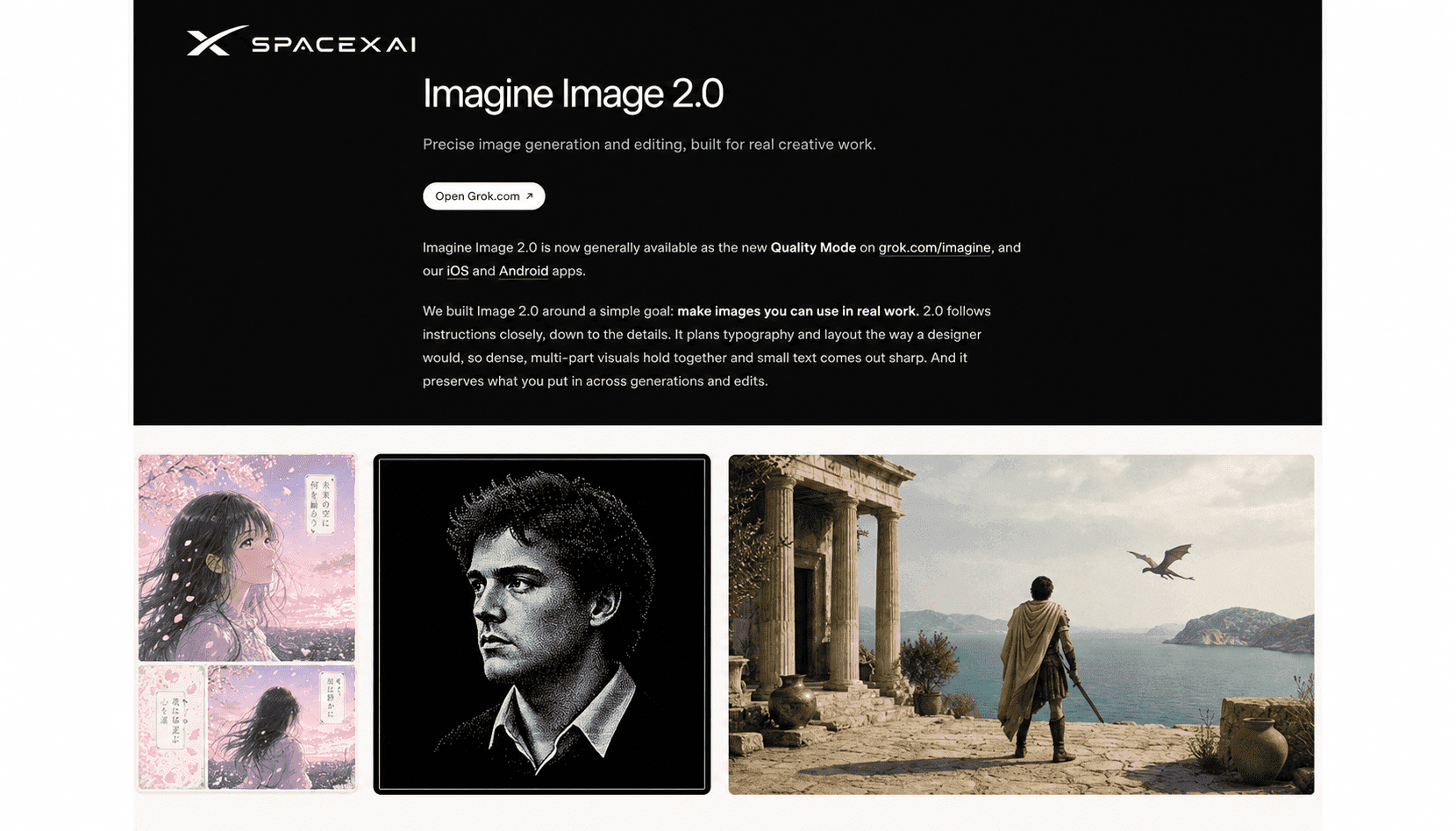
Most text-to-image models still require luck and heavy hand-holding to produce consistent, on-brand assets. Imagine Image 2.0 moves in the opposite direction: it plans composition and type like a designer, preserves what you already like, and gives you surgical controls to change only what you don’t. That repositioning—from inspiration engine to production instrument—matters for teams shipping ads, product shots, and UI elements on weekly cycles. The promise here is not just beauty on demand, but consistency across rounds of edits, aspect ratios, and deliverables without breaking layout logic or text legibility.
Two capabilities push it into day-to-day workflows. First, precise regional editing: point at a sleeve to recolor, mask a sky to replace, remove a background to export a clean subject—without collateral damage to type, grid, or lighting. Second, multi-reference generation: feed up to several images to keep product geometry, a model’s face, or brand motifs consistent as you iterate. Together, these features reduce the back-and-forth between generation and manual comping, and they help maintain continuity across campaign variants, A/B concepts, and seasonal refreshes.
Smart resizing is the third leg of the stool. Instead of regenerating from scratch for 1:1, 9:16, or 16:9, 2.0 reframes the scene to fill each ratio while honoring hierarchy: hero object stays hero, type remains crisp, and whitespace is rebalanced instead of stretched. Paired with reusable templates for marketing, product, headshots, icons, and game assets, teams can lock a look and scale it across channels. The practical payoff is predictable throughput: less artisanal prompt tweaking, more reliable asset pipelines that respect brand standards.