

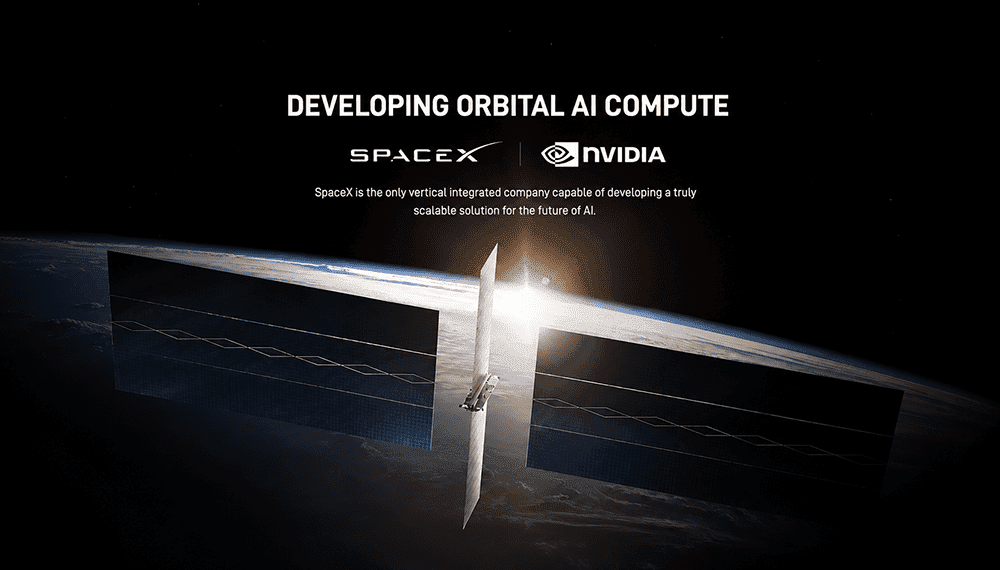
What changed is not just a partnership announcement—it is an architectural claim: that abundant sunlight, near-vacuum heat rejection, and global coverage can make orbital compute a cheaper, more resilient substrate for selected AI jobs. Starmind’s concept pairs rack-scale GPU systems with large solar wings and radiators on LEO buses, stitched by laser inter-satellite links. The bet is that the toughest constraints throttling terrestrial AI buildouts—grid capacity, cooling water, land use, and permitting—are relaxed above the atmosphere, enabling rapid capacity adds and smoother power economics. The open question is where the physics, networking, and maintenance realities erase those advantages.
Latency defines the first boundary. Even with LEO passes and optical downlinks, round trips to end users are rarely competitive with metro inference for interactive products. But many AI cycles are not interactive: pretraining, post-training distillation, synthetic data generation, large-scale embedding, and batch analytics tolerate seconds to minutes of delay. For those, orbit acts like a giant solar-fed precompute layer. Edge-adjacent cases—maritime, aviation, disaster zones, or remote sensing—also benefit when the data source is already in space and results are compacted before hitting congested ground pipes.
Economically, the trade is launch and space-hardening capex versus long-term opex savings from free solar, high delta-T radiative cooling, and minimal real estate costs. If launch costs keep falling and replacement cycles are predictable, TCO per effective GPU hour can drop meaningfully for batch workloads. However, derating for radiation, shielding mass, and expected component failures pulls utilization down, while data movement (uplink/downlink) and constellation orchestration add software and network overhead. The case pencils out when orbital duty cycles stay high, compute-to-data ratios are favorable, and ground power is scarce or expensive.
Execution risk is non-trivial. Radiation events, thermal cycling, micrometeoroids, and docking constraints demand robust fault domains, frequent health telemetry, and automated workload migration. Regulatory layers—spectrum use, debris mitigation, export controls, and cross-border data—shape feasible deployments as much as hardware. Practically, buyers should frame Starmind as a specialized tier in a multi-venue strategy: prepare models for orbital runs with quantization and distillation, plan for staged datasets with aggressive compression, and require verifiable SLAs on throughput, error rates, and refresh cadences, not just headline TFLOPs.