

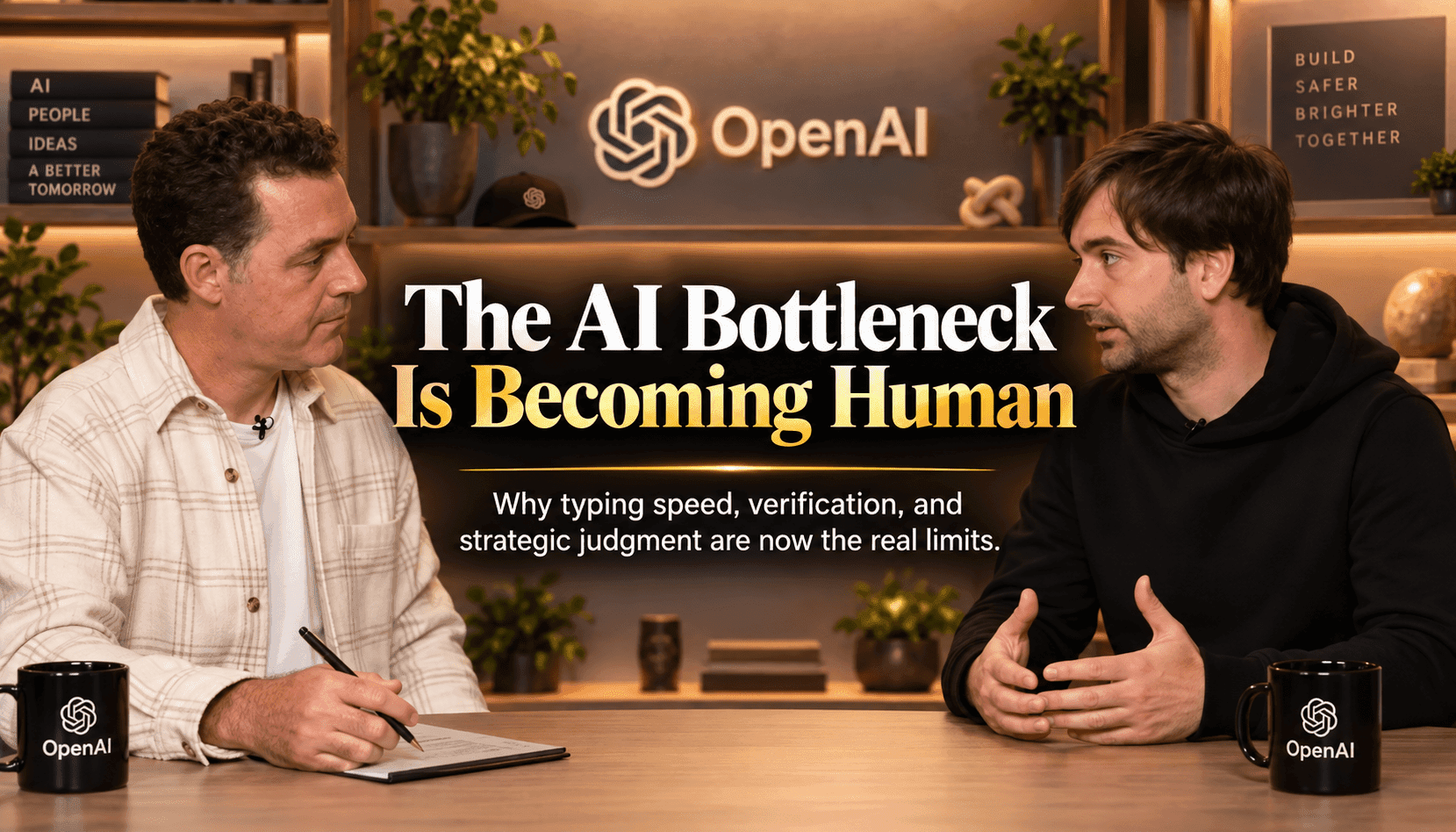
The frontier in AI productivity is no longer just model quality or token speed. With ultra-fast modes and toolchains enabling concurrent execution, the machine side of the loop has outpaced human throughput. Teams report the same friction points resurfacing: slow intent capture through keyboards, verification queues forming behind parallel tasks, and escalating context load for decision-makers. When agents can spin up multiple explorations in seconds, the bottleneck shifts to directing them precisely, auditing their work efficiently, and choosing the right next move without stalling momentum.
This shift reframes how we design agent experiences. If laptops and local UX were sized for human throughput, agent operations must move toward cloud execution and voice-first, multimodal input that matches natural thinking speed. But speed without control produces attention debt and silent error propagation. The core operating problem becomes orchestrating review at the right fidelity: real-time spot checks for routine actions, structured tests for code or data changes, and human sign-off only where judgment truly creates value. The goal is not more automation; it is better allocation of scarce human cognition.
Practically, leaders should track time-to-verified-decision (TVD) and its components: intent latency (how long to specify the task clearly), verification cost (tests, evidence, approvals), and attention churn (context switches per hour). These metrics expose where speed collapses into rework. Voice dictation, structured prompt templates, and auto-generated acceptance criteria cut intent latency. Agent-run tests, provenance logs, and change diffs compress verification. Risk-tiered autonomy preserves executive attention for ambiguous or high-impact calls. The payoff is compounding: as verification gets cheaper and clearer, teams can safely raise autonomy without losing control.
The next competitive advantage will come from how well organizations instrument and govern the human side of the loop. Winners will treat intent, verification, and judgment as first-class design surfaces with SLOs, not as ad hoc habits. That means productizing review evidence, standardizing decision records, and tuning agent autonomy by business risk rather than by feature availability. It also means training teams on faster expression modes—voice-first briefings, structured prompts, and iterative scaffolds—so the machine’s speed converts into verified outcomes, not unreviewed output. In short: redesign for human bandwidth to unlock machine velocity.