

AI tools now sit inside everyday workflows—from sales notes to legal drafts—making privacy diligence a front‑door requirement, not a back‑office chore. Before any team uploads prompts or documents, you need clarity on who can access the data, how it is processed, and whether it can resurface in model training or analytics. Your checklist should be precise, documented, and repeatable, so frontline teams don’t have to guess. This guide compiles a practical set of questions and decision tests to evaluate commercial and publicly available AI products, with an emphasis on sensitive information handling, vendor controls, and the evidence you should collect before allowing production use.
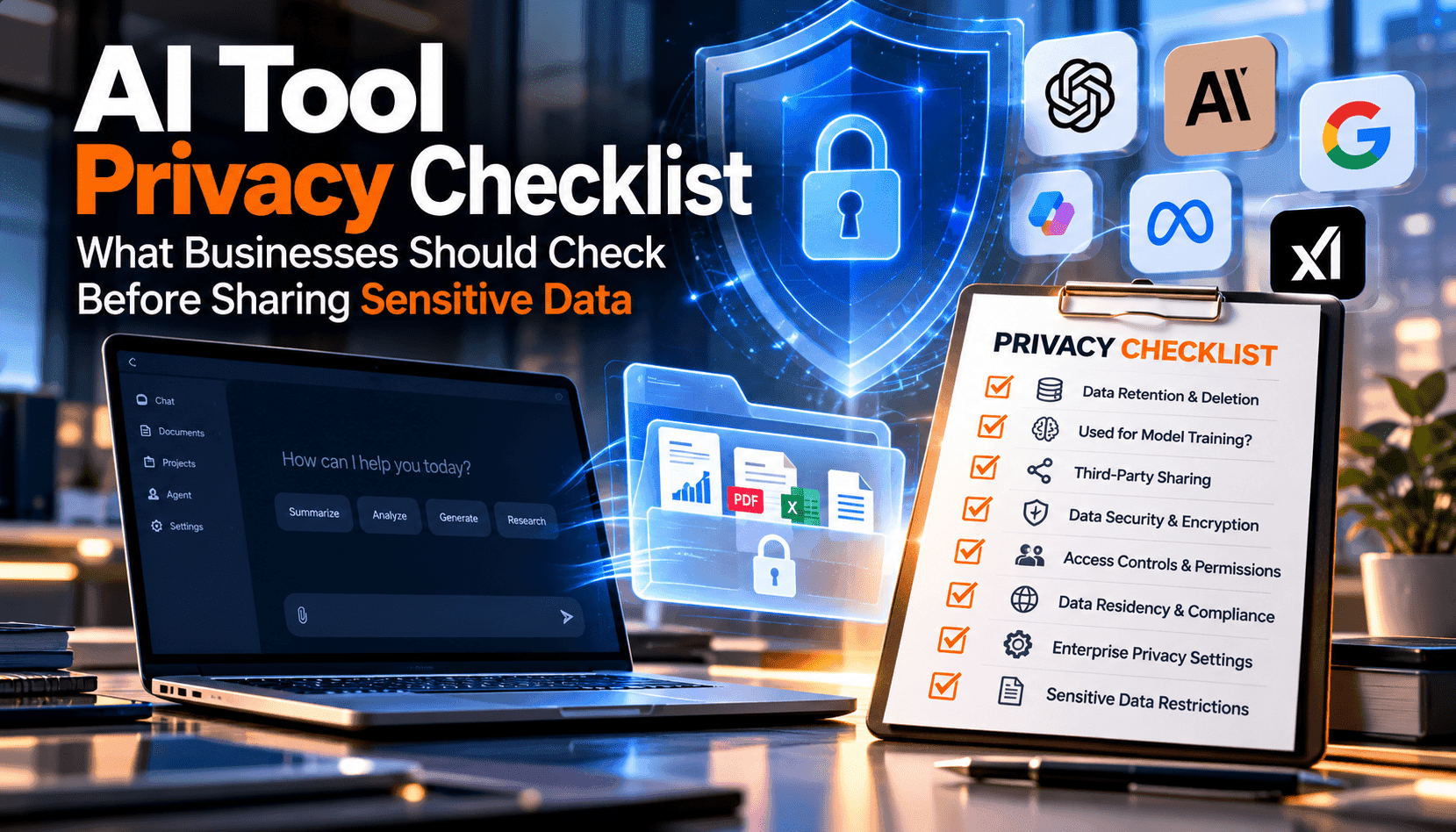
Start with the principle of data minimisation: do not input personal or especially sensitive data into publicly accessible generative AI tools. If your use case truly requires handling personal information, switch to enterprise plans with contractual safeguards and documented technical controls. Confirm whether the provider or its subprocessors can view prompts, attachments, or outputs, and whether any of that material is used to train base or fine‑tuned models. If opt‑outs are offered, verify they apply to both training and broader analytics telemetry and that they are enabled by default for your tenant and APIs, not just for a user interface.
Retention, deletion, and data flows are where privacy risks persist long after a prompt is sent. Demand written defaults for log retention, cache windows, and model artifact storage, plus a verifiable deletion path that covers backups and processor copies. Map every hop: client, gateway, model host, vector stores, file converters, content filters, and observability pipelines. Require encryption in transit and at rest, SSO with strong MFA, role‑based access, private networking options, and DLP policies that block uploads containing sensitive identifiers. Finally, embed human oversight: accuracy checks, escalation routes, and clear signals to external users whenever they interact with AI systems.
Treat vendor onboarding as the start of a lifecycle, not a green‑light event. Record a privacy impact assessment, the lawful basis or consent model, and the specific purposes approved for use. Establish change‑control triggers—new features, processor additions, region changes, or training policy updates—so the tool is re‑reviewed before risk drifts. Monitor outputs for accuracy and inadvertent personal data generation, publish guidance to employees on safe prompts, and run periodic audits. If the risk cannot be controlled—especially with sensitive information—keep that data out of the tool and redesign the workflow.