

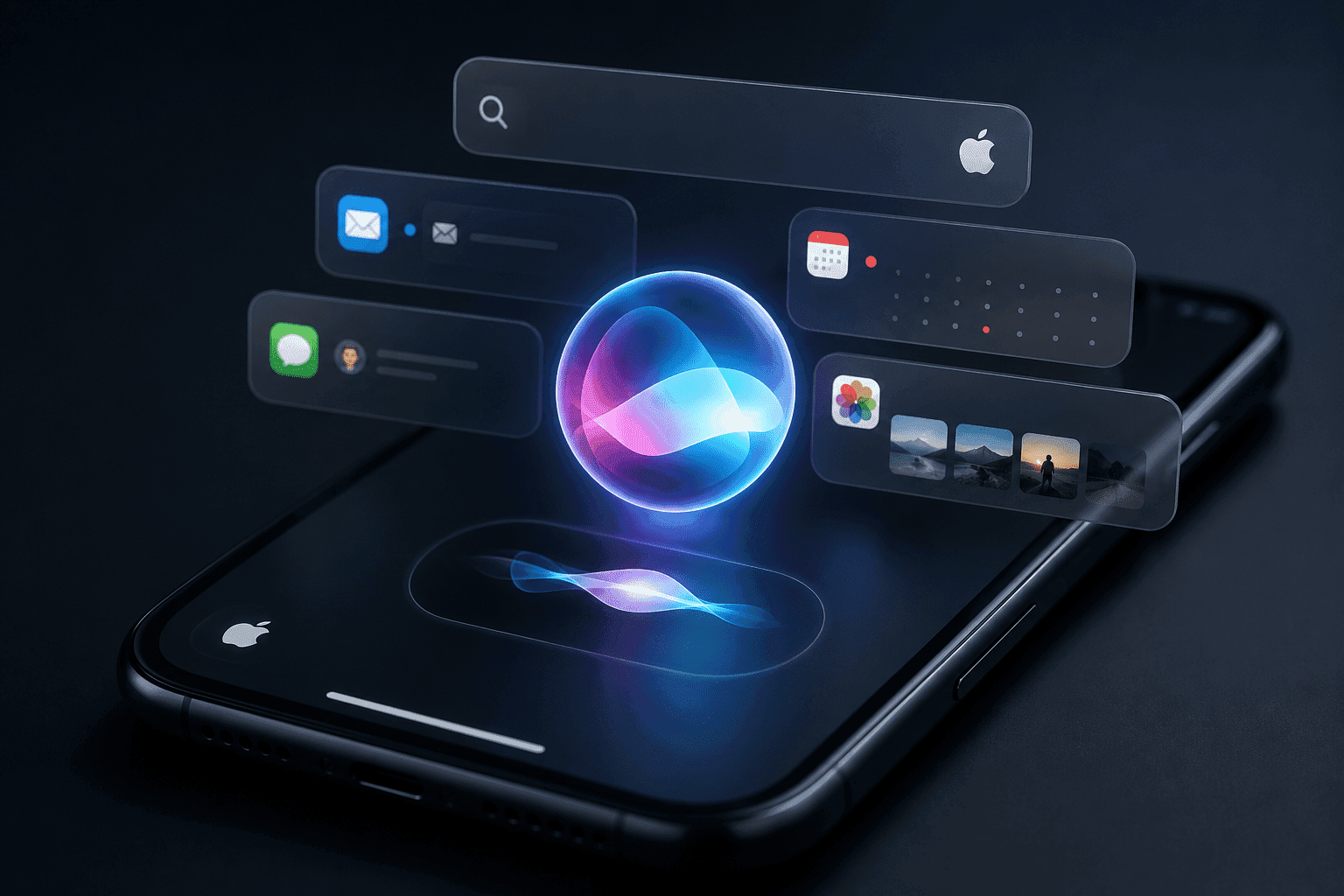
The new Siri reframes iPhone from a voice search feature into a personal AI workspace. In the iOS 27 public beta, Siri reads on‑screen context, pulls from Mail, Messages, Photos, and Calendar, and executes actions via Spotlight and App Intents. Instead of asking a general chatbot for help, users can ask Siri to summarize a group text, extract a date from an email into Calendar, surface a photo set by people or objects, or clarify what’s in the camera view—all without app hopping. Siri also ships as a dedicated app, but the deeper shift is OS-wide reach: invoke from the side button, the Dynamic Island, or Spotlight to blend retrieval, reasoning, and action where work already happens.
Strategically, Apple is betting on context and control over size and spectacle. On-device models optimized for Apple Silicon handle most tasks with low latency and privacy, escalating selectively to a private cloud for heavier inference. That changes the economic and governance profile: fewer round trips to external LLMs, clearer consent prompts for data scopes, and predictable action pathways through system frameworks. It also differentiates from free-floating chatbots by anchoring intelligence in a user’s own corpus and device capabilities. If Apple can consistently complete tasks end-to-end—read, reason, and act—Siri becomes less a novelty and more a daily operating layer for personal and work routines.
For teams and enterprises, the near-term question isn’t whether Siri can converse; it’s whether it can reliably offload routine tasks with compliance. The beta shows promise in inbox triage, lightweight summaries, meeting prep, photo/document retrieval, and contextual lookups. Mobile device management (MDM) admins should evaluate default permissions, audit logs for context access, and kill-switches for private cloud escalation. Product leaders should expose App Intents for critical tasks (create, search, update) so Siri can operate within their apps safely. Buyers should measure task completion rate, time saved, and user-reported trust, then compare against third-party assistants that lack system privileges but may offer deeper domain skills.