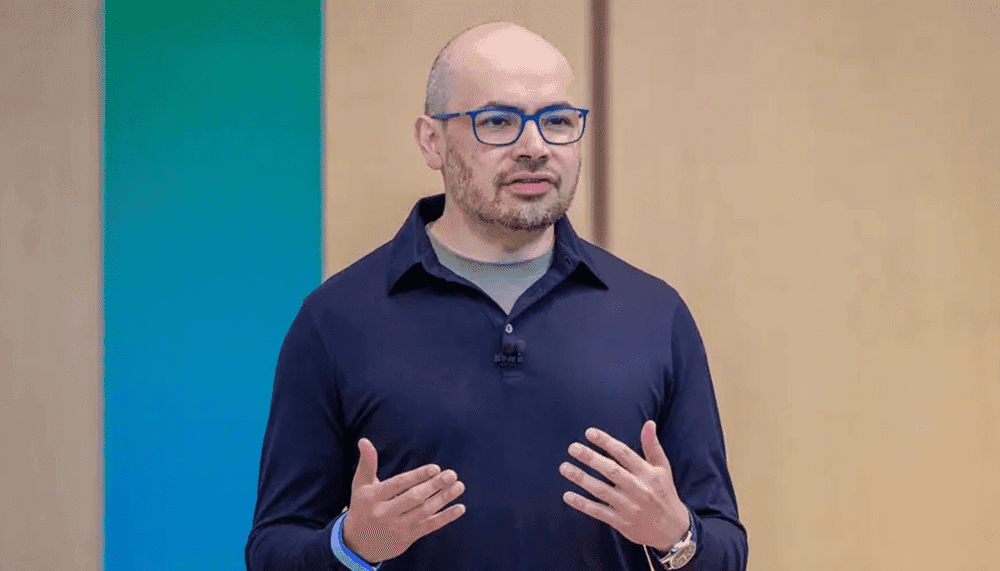
Google DeepMind CEO Demis Hassabis says AGI could arrive around 2030, making the next few years critical for work, science, governance and AI readiness.
Demis Hassabis’ latest AGI comments are a reminder that the AI industry is no longer talking about artificial general intelligence as a distant philosophical idea. The Google DeepMind CEO has suggested that AGI could arrive around 2030, with the possibility of a major shift in how humans work, learn, discover and organize society.
The phrase “new human era” is intentionally large. Hassabis is describing a future where AI systems may help cure diseases, accelerate science, improve education, transform productivity and potentially create forms of abundance that current economic systems are not designed to handle.
But the warning is just as important as the optimism. If AGI arrives within a few years, society has limited time to prepare for job disruption, misinformation, governance failures, safety risk, concentration of power and a widening gap between people who use AI well and people who are displaced by it.
Why the 2030 AGI window matters
A 2030 AGI timeline changes the practical planning horizon. This is not a century-scale forecast; it is within the timeframe of current startups, university students, enterprise transformation plans, government policy cycles and career decisions. Even if AGI arrives later, the preparation work is already relevant because today’s AI tools are changing work now.
For companies, the key question is no longer whether AI will be useful. It is whether the organization can redesign workflows, data systems, roles and decision processes quickly enough to keep up with increasingly capable models and agents.
The upside: science, medicine and abundance
Hassabis’ optimism is grounded in DeepMind’s long-term mission: build general intelligence and use it to accelerate discovery. The most compelling AGI upside is not only better chatbots or cheaper software. It is the possibility of faster breakthroughs in medicine, materials, energy, biology and other fields where human progress is limited by complexity.
For AI users, this means the most valuable tools may be those that help people reason through complex problems, generate hypotheses, analyze data, simulate scenarios and collaborate with expert systems. The “new human era” will likely reward people who can combine domain expertise with AI-assisted exploration.
The risk: society may prepare too slowly
The biggest danger is not only technical failure. It is social lag. Schools, companies, governments and legal systems often adapt slowly, while AI capability can improve quickly. If the preparation window is short, institutions may be reacting to disruption after it has already reshaped work and power.
This is why AGI readiness should include more than safety labs. It should include workforce transition plans, AI literacy, new education models, economic policy, cyber resilience, model evaluation, transparency rules and better public understanding of what AI systems can and cannot do.
What founders and businesses should do now
Founders should treat AGI preparation as a product and workflow strategy. That means building companies that can adapt to faster model progress, use AI deeply in operations, protect proprietary data, route tasks across models, and keep humans focused on judgment, trust, strategy and customer understanding.
Businesses should map which workflows are repetitive, which require judgment, which depend on private knowledge, and which can be improved by agents. The winning organizations will not simply buy AI tools. They will restructure work around AI while protecting institutional intelligence.
How NexusAI users should think about tool selection
For individual users, the practical move is to build an AI readiness stack. That stack should include a strong general assistant, a coding or automation tool, a research workflow, a creative production workflow, a personal knowledge system and a habit of testing new models against real tasks.
Tool selection should be based on adaptability. The best AI tools are not only powerful today; they should help users learn faster, automate repeatable work, preserve context, improve judgment and move from passive consumption to active building.