

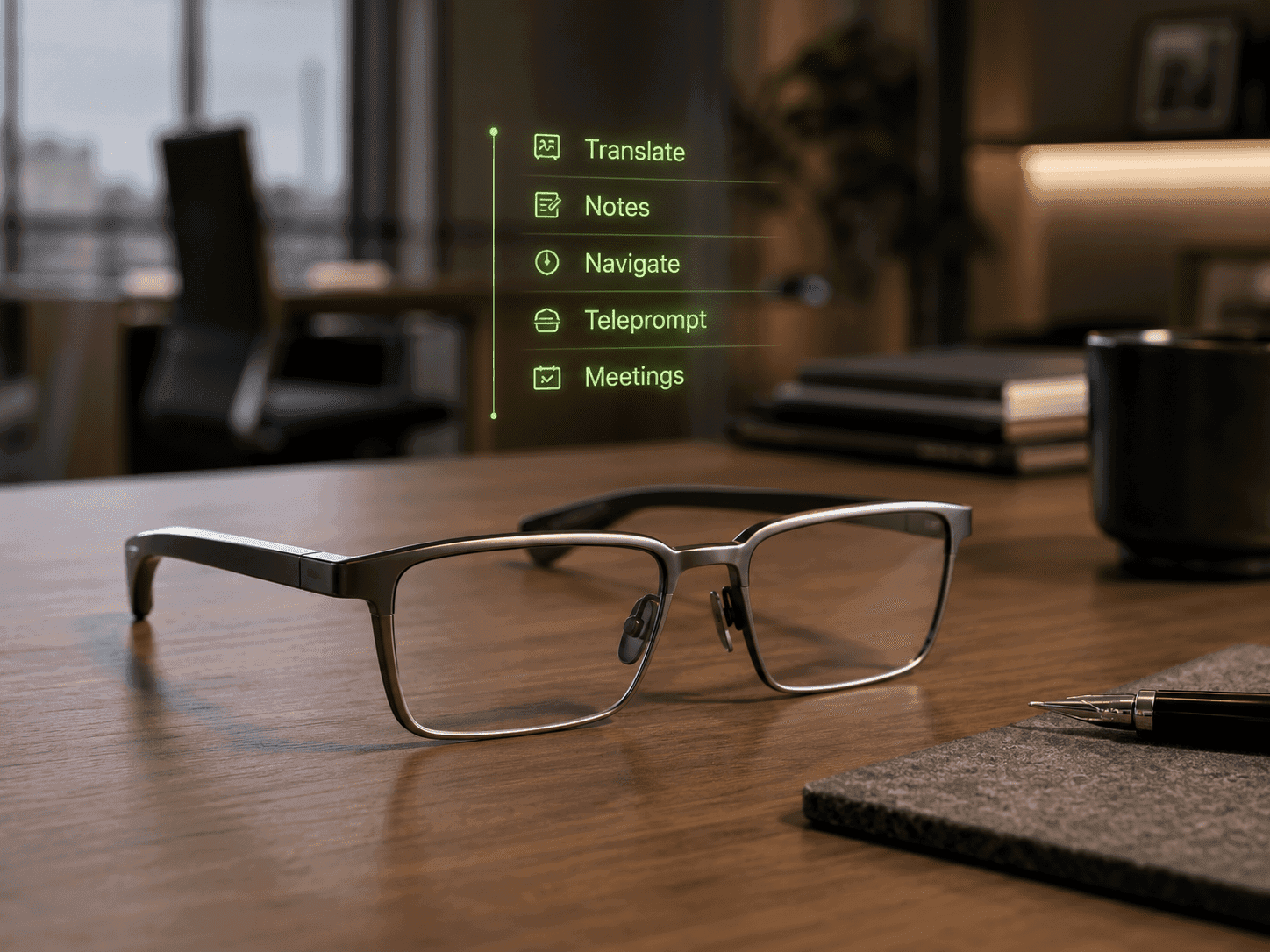
Smart glasses haven’t broken through at work because cameras create an immediate privacy and compliance tax: consent signage, policy rewrites, workforce pushback, and nervous clients. Even Realities’ G2 tries a different path. By dropping cameras and speakers in favor of a bright, monochrome heads-up display, it reframes value around glanceable assistance—translation, teleprompting, navigation, notes, and meeting context—without recording by default. That seemingly small architectural choice could be the unlock for conference rooms, regulated sites, and customer-facing roles where social acceptance and policy simplicity matter as much as raw capability.
The G2’s proposition is focused flow. Instead of juggling phone screens mid-meeting, users get short prompts and summaries in-eye: agenda cues, key bullets, route arrows, and live translation that is good enough to negotiate basics across languages. It’s not a general AR computer; it’s a HUD for words and wayfinding. In practice, that helps presenters keep eye contact, travelers navigate unfamiliar cities, and analysts follow jargon-heavy briefings without pulling out a device. The bet is that reduced context switching delivers measurable productivity and lower social friction than camera-first wearables or bulky AR headsets.
Trade-offs remain. The experience relies on a phone link, so reliability depends on the app, Bluetooth stability, and local noise conditions for wake words. Navigation works but benefits from more accurate address handling. Meeting assistance and transcripts are helpful, though long-form AI answers can scroll past the comfortable reading window. Brightness and mic behavior still need tuning across real-world environments. Yet these are solvable software and integration issues. If the camera-free posture reduces legal review cycles and employee resistance, total deployment friction may still be net lower than camera-equipped options.
For buyers, the near-term move is a focused 6–8 week pilot with participants who present, travel, or lead recurring meetings. Define success up front: fewer device look-downs per session, higher audience engagement, faster comprehension in multilingual interactions, and lower note-taking overhead. Pair with guardrails—data retention limits for transcripts, clear opt-in etiquette, and mobile management controls. If results show a reduction in task-switching and better on-the-spot comprehension, G2-style HUD wearables could claim a durable slice of enterprise "ambient computing" that neither camera glasses nor full AR rigs address well today.