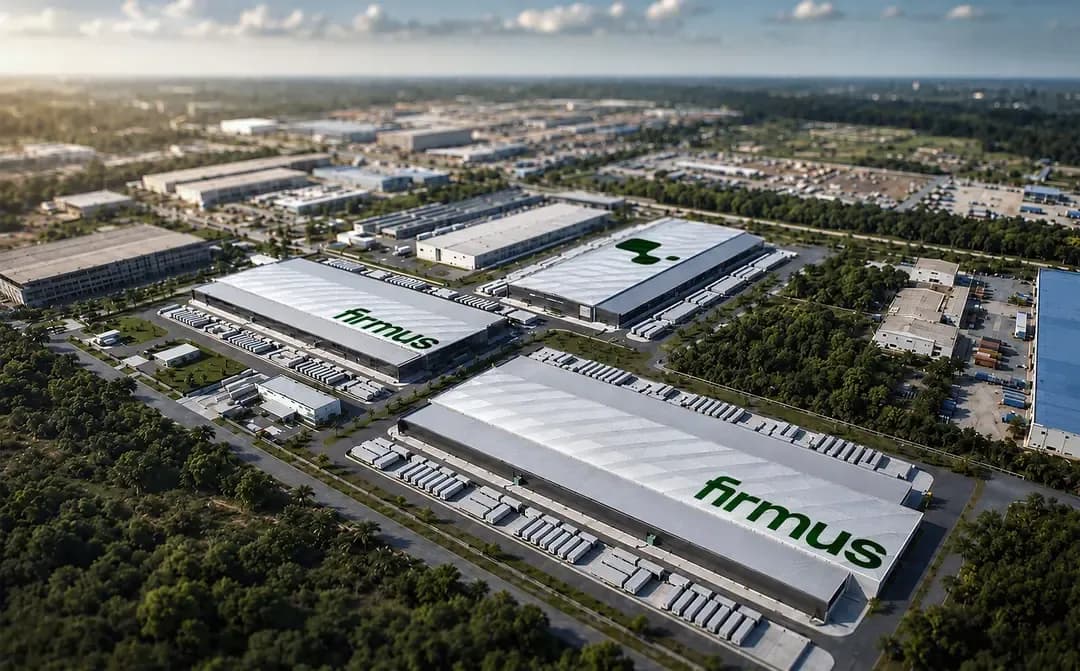
Firmus and NVIDIA’s 360 MW Batam AI factory shows how AI-native companies may access hyperscale-grade compute through new revenue-sharing and offtake-backed infrastructure models.
Firmus and NVIDIA’s 170,000-GPU AI factory plan is more than another data center announcement. It reflects a structural shift in how AI infrastructure is financed, deployed and sold to companies that are building AI-first products but do not necessarily have the capital strength of a hyperscaler.
The project is anchored by a 360 MW NVIDIA DSX AI Factory campus in Batam, Indonesia. Firmus says the agreement covers up to 170,000 NVIDIA AI accelerators across Grace-Blackwell, Vera-Rubin and Vera platforms through 2027 and 2028, positioning the campus among the largest AI infrastructure developments in Asia-Pacific.
The more interesting detail is the business model. Firmus will sell NVIDIA-powered cloud services, while NVIDIA earns standard product revenue and a share of cloud revenue on supported capacity. That structure points to a future where AI compute access is not just a hardware sale, but a shared infrastructure platform with recurring usage economics.
NVIDIA DSX turns the data center into an AI factory
Firmus says the campus will integrate NVIDIA DSX, NVIDIA’s full-stack AI factory platform, with its proprietary HyperCube liquid-cooled architecture. The point is to design, simulate and operate the facility as one coordinated AI factory rather than a generic data center filled with GPUs.
This distinction matters for AI workloads. Training and inference need power, cooling, networking, storage, scheduling, reliability and tokens-per-watt efficiency to work together. An AI factory is valuable when it lowers the cost per token and increases usable capacity, not simply when it installs more chips.
Why Batam matters for Asia-Pacific AI capacity
The Batam location is strategically important because it expands large-scale AI infrastructure in Asia-Pacific, near Singapore and regional enterprise demand. As AI adoption spreads globally, compute localization, latency, regulatory concerns and regional capacity will matter more.
AI infrastructure is becoming a geopolitical and commercial asset. Regions that can offer power, cooling, land, connectivity and trusted partners may attract AI-native companies that want alternatives to overloaded U.S. and European compute markets.
What AI founders and tool builders should watch
For founders, the key question is not whether this specific campus is useful today. The question is whether AI compute is becoming easier to buy in flexible, usage-linked and regionally diversified ways. If it is, smaller AI-native companies may be able to compete with stronger infrastructure economics.
NexusAI users should watch customer commitments, pricing, availability, supported models, latency, uptime, cloud interfaces, energy efficiency and whether Firmus can bring capacity online as planned. The winners in AI tools may be the teams that pair strong products with reliable access to compute before competitors do.