

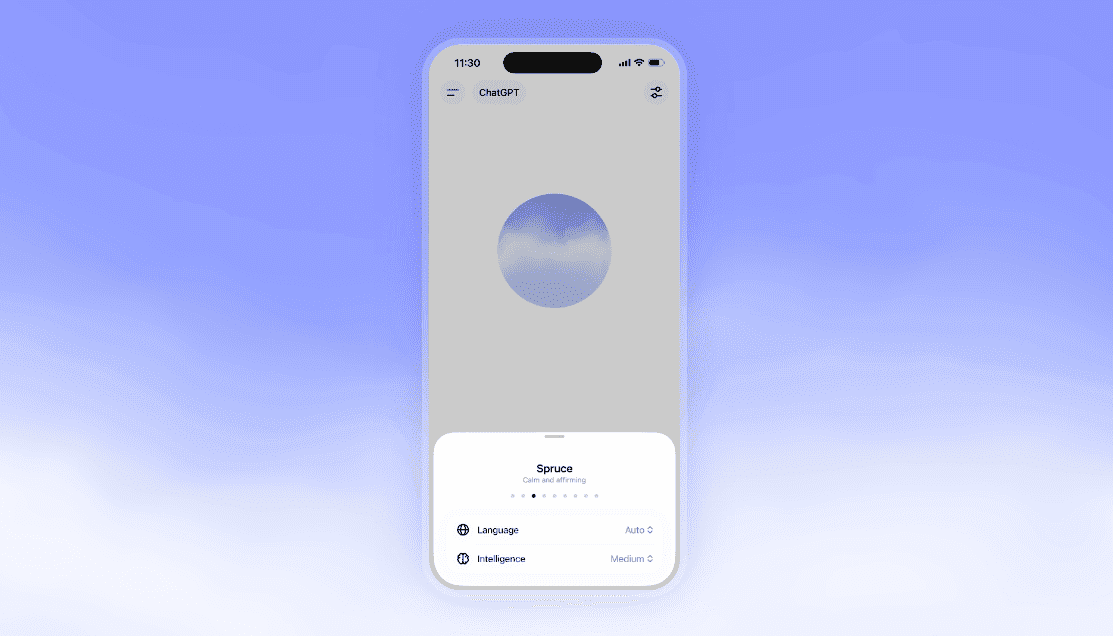
GPT‑Live‑1 reframes ChatGPT Voice as a work interface rather than a voice novelty. The model can listen and speak at the same time, letting you interrupt naturally, redirect, or provide quick clarifications without waiting for turn‑based pauses. Inside a single chat, Voice now coordinates web search, uses memory where enabled, and shows visual widgets for results, while streamed text keeps a readable audit trail. For teams juggling dynamic tasks—triage, research, and drafting—this reduces context switching: you talk, it acts, and the conversation surface stays the source of truth with artifacts you can review, edit, or export.
Practically, this matters because most real‑world work is messy. People change their minds mid‑sentence, need to compare options, and verify facts. A voice agent that tolerates interruptions and blends modalities can gather sources, summarize, and assemble outputs faster than a chat‑only or voice‑only agent. GPT‑Live‑1 pushes more of that orchestration into the conversation itself. The streamed text means output is inspectable, while visual cards minimize cognitive load by surfacing key results or images without bouncing to another app. For complex knowledge tasks and quick decisions, that combination is often more usable than separate voice and search tools.
The rollout splits capability by plan—GPT‑Live‑1 for paid, GPT‑Live‑1 mini for Free—so leaders should anticipate uneven quality across teams and customers. There are also constraints: no video or screen sharing in this mode, and early limitations for Business, Enterprise, and Edu workspaces. Still, pilots can deliver measurable gains in response time, task completion, and user satisfaction if you pair Voice with clear prompts, privacy controls, and fallback paths to text or advanced modes. Treat this as an interaction paradigm shift: from typing instructions to speaking goals, then curating reliable, visualized results in one living thread.