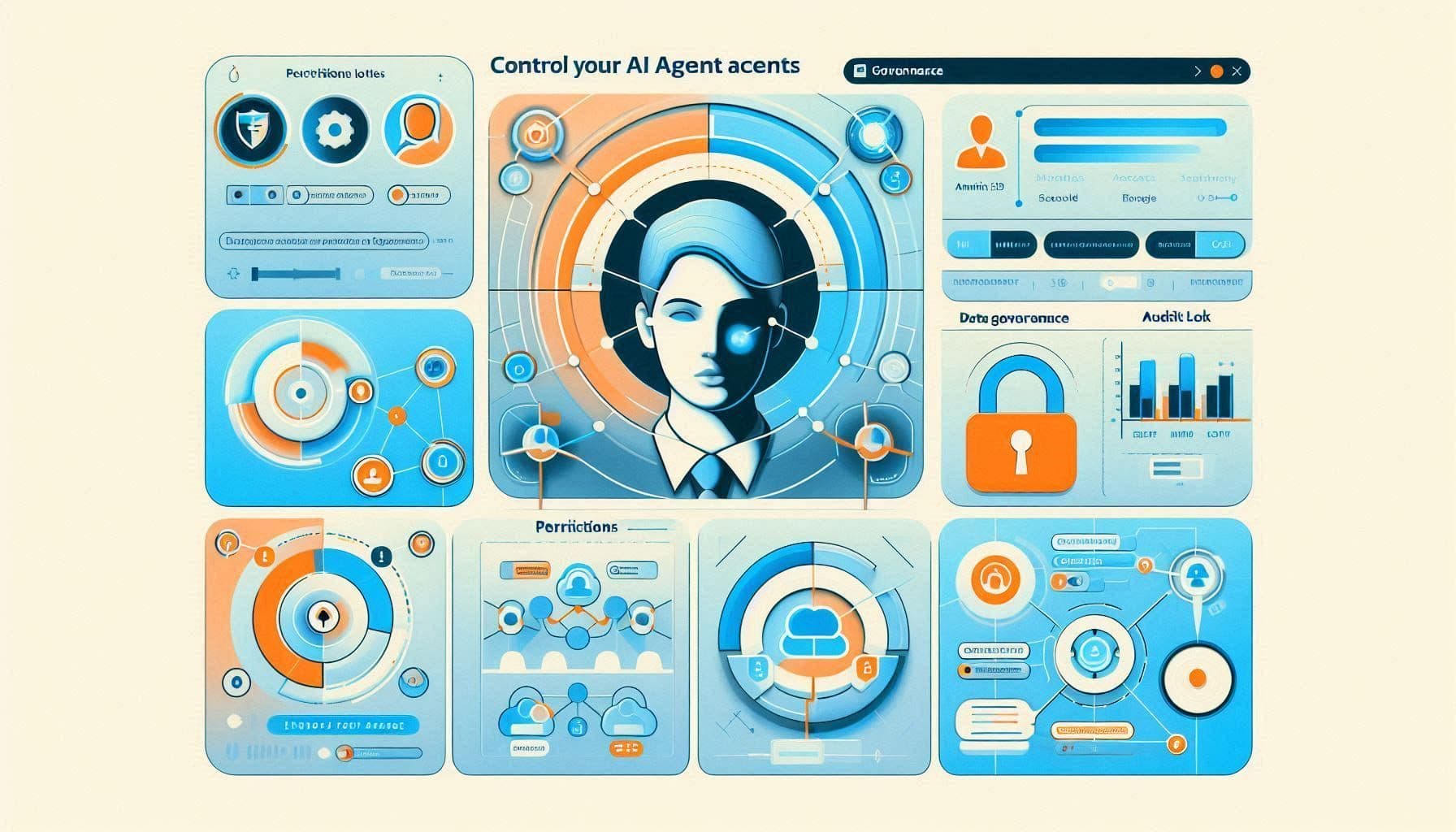
Microsoft Agent 365 highlights a major enterprise AI lesson: as agents gain permissions, tools, and autonomy, companies need identity, governance, observability, and audit trails before deployment becomes safe.
The first stage of enterprise AI was about giving employees access to assistants. The next stage is about controlling what those assistants and agents are allowed to do. Microsoft Agent 365 is important because it reflects a larger shift: AI agents are starting to need the same governance discipline as employees, service accounts, apps, and automation bots.
This matters because agents are not just content generators. They may read files, summarize inboxes, triage tickets, update records, trigger workflows, and act across business systems. Without identity and auditability, an organization may not know which agent accessed which data, why it acted, or whether it operated inside the correct boundaries.
For NexusAI users, the key takeaway is practical: enterprise AI maturity will be measured less by how many agents a company launches and more by whether those agents are governed, observable, permissioned, and recoverable when something goes wrong.
Why a control plane is becoming necessary
A control plane gives organizations a central way to see, manage, and secure agents. Without this layer, every department may create agents with different permission rules, data access patterns, monitoring gaps, and escalation processes. That creates hidden operational risk.
The most important capability is not only creating agents. It is being able to answer questions such as: Which agent exists? Who owns it? What can it access? Which user or system does it act for? What actions did it take? What data did it touch? Can it be paused, reviewed, or revoked immediately?
Identity is the foundation of agent governance
Human employees already have identity systems, permissions, device policies, access reviews, and offboarding processes. AI agents need comparable controls. An agent that works on behalf of a user should not automatically inherit every possible permission forever. An agent that acts independently needs a defined scope, owner, lifecycle, and monitoring trail.
Identity also supports accountability. If an agent updates a record, sends a message, deletes a file, or triggers a workflow, the organization needs to know whether that action was performed by a person, a delegated agent, or an autonomous agent with its own assigned role.
The new enterprise AI buying checklist
Enterprises evaluating agent platforms should look beyond demo quality. A polished agent demo can hide serious deployment weaknesses. The buying checklist should include permission design, audit logs, data loss prevention, integration boundaries, escalation controls, admin visibility, monitoring, compliance reporting, and incident response.
The strongest AI platforms will let businesses gradually expand autonomy. A support triage agent may begin by drafting responses, then progress to routing tickets, then eventually resolving specific issue types under policy. Governance controls make that progression safer.
What this means for smaller teams
Small teams may not need a full enterprise control plane on day one, but they still need basic rules. Every agent should have a named owner, a clear job description, limited permissions, a test environment, logging, and a defined human fallback. If an agent touches customer data or payments, the review standard should be much higher.
The practical mistake is treating agents like ordinary productivity tools. They are closer to junior digital workers connected to sensitive systems. That makes governance a growth enabler, not just a compliance burden.