NexusAi logo

NexusAi

  • About
  • Products
  • Category
  • Prompts
  • Search
  • Insights
  • Pricing
  • Contact
Sign In
NexusAi LogoNexusAi

NexusAI helps you discover, compare, and learn AI tools with ease. From expert insights to training resources, we empower individuals and businesses to harness AI technology for smarter decisions, innovation, and growth.

Useful Links

  • AI Products
  • AI Category
  • AI Prompts
  • AI Search
  • AI Insights

Our Services

  • AI Product Showcase
  • Smart AI Tool Explorer
  • AI Training & Insights
  • Terms and Conditions
  • Privacy Policy

Contact Us

88 Tribune Street
South Brisbane, QLD, Australia, 4101
Website: www.nexusai-tech.com
Email: info@nexusai-tech.com

© Copyright 2026 NexusAi All Rights Reserved

Developed by DStudio Technology
Home/AI Insight/AI Product News/Microsoft’s Project Solara Points to an Agent-First Future Beyond Traditional Apps
AI Product NewsFuture Work

Microsoft’s Project Solara Points to an Agent-First Future Beyond Traditional Apps

Microsoft’s Project Solara concept shows how AI agents may reshape work devices, operating environments, and enterprise interfaces by moving from app-first workflows to agent-first experiences.

NexusAI TeamJun 5, 20263.4K views9 min read
Microsoft’s Project Solara Points to an Agent-First Future Beyond Traditional Apps
AI Brief

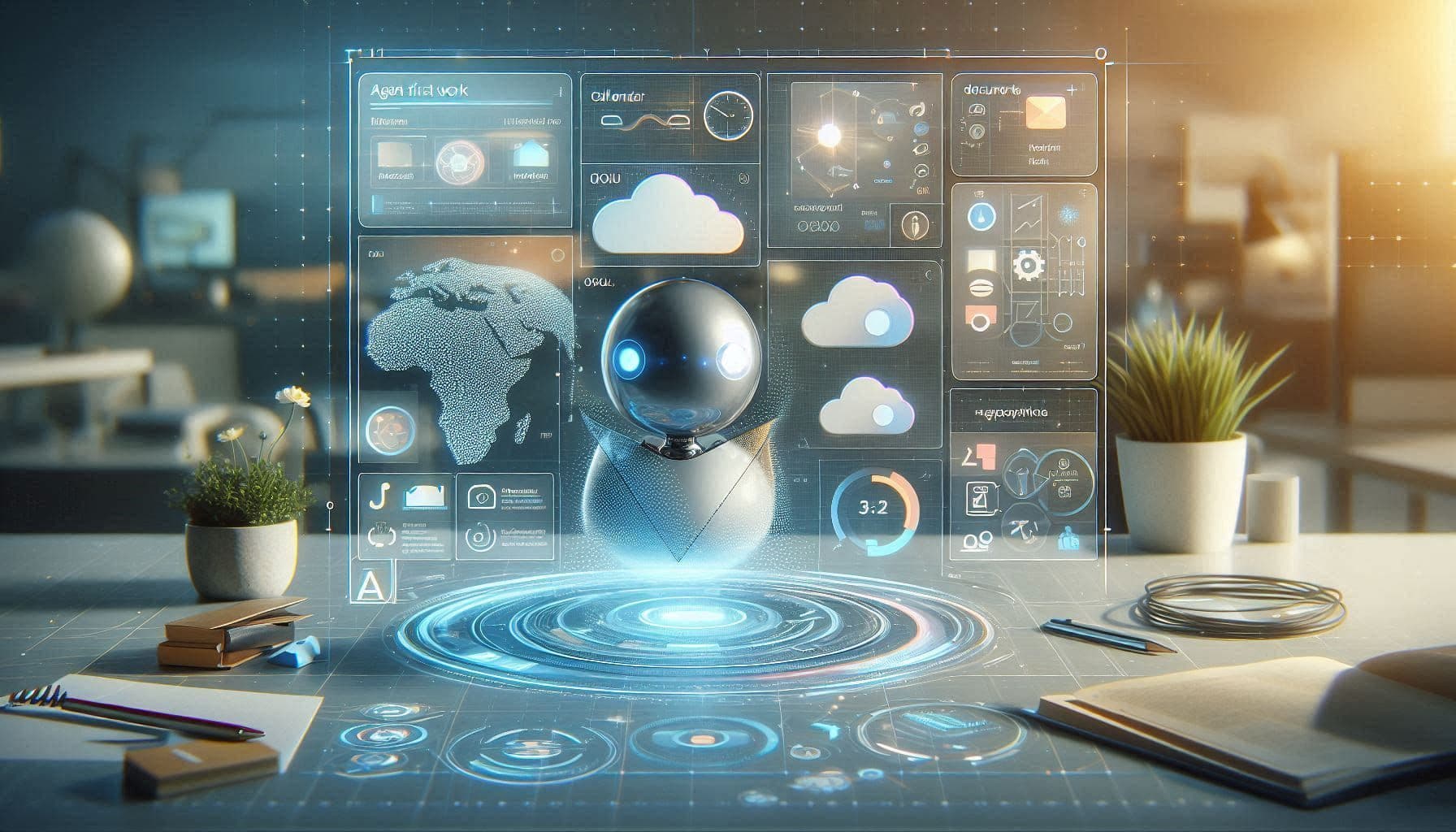
Microsoft’s Project Solara points toward a future where AI agents become the main interface across enterprise devices. Instead of opening separate apps for every task, users may interact with agent-first devices that understand context, connect to cloud services, and surface just-in-time interfaces for the work at hand.

For years, digital work has been organized around apps. Users open an email app, a spreadsheet app, a browser, a CRM, a calendar, a project management tool, and a messaging platform. AI assistants have mostly been added on top of this app-based world.

Microsoft’s Project Solara direction suggests a different possibility: enterprise devices and interfaces built around AI agents first. In this model, the agent becomes the main layer that understands context, coordinates tasks, and calls the right software or interface only when needed.

For NexusAI users, this is important because it shows how AI may move beyond websites and chat windows. The next wave of workplace AI could live inside wearables, desk devices, browsers, operating environments, and cloud-connected work hubs that make software feel less fragmented.

Key Takeaways

AI may move beyond app-based workflows

Agent-first systems could reduce constant app switching by coordinating tools, context, and actions around user goals.

Devices may become AI work surfaces

Wearables, desk hubs, and frontline devices could become focused interfaces for enterprise AI agents.

Agent-ready software will matter

Tools with clean APIs, strong permissions, and modular workflows may become easier for AI agents to operate.

From app-first work to agent-first work

The app-first model asks users to remember where everything lives. A support worker may need to move between a ticketing system, customer history, product documentation, internal chat, scheduling tools, and reporting dashboards. The user becomes the integration layer.

An agent-first model tries to reverse that burden. The user explains the goal, and the agent brings together the right context, tools, permissions, and interface. Instead of manually switching between systems, the worker interacts with a more adaptive digital layer.

Why devices matter in the AI agent race

Most AI product discussion focuses on software, but hardware and device context may become just as important. If an AI agent knows whether a user is at a desk, in a store, on a warehouse floor, in a meeting, or visiting a customer site, it can present different interfaces and different actions.

This is why agent-first devices are strategically interesting. They do not need to replace laptops or phones immediately. Their value may come from creating focused work surfaces for frontline workers, enterprise teams, field staff, healthcare environments, retail operations, and service workflows.

The rise of just-in-time interfaces

A traditional app has a fixed interface. A just-in-time AI interface can change based on the task. For example, a retail associate may see product lookup, customer preference, inventory, and return policy actions only when those options are relevant. A field technician may see diagnostic steps, documentation, replacement part history, and reporting actions at the moment of repair.

This matters because many business tools are overloaded. They contain too many menus, fields, permissions, dashboards, and workflows. AI agents can potentially reduce interface complexity by showing the next useful action instead of forcing users through the full software structure.

What this means for AI tool builders

AI tool builders should pay attention to this direction because the interface layer is changing. A product may no longer be judged only by its dashboard. It may need to expose actions, context, APIs, permissions, and workflow states so agents can use it effectively.

This creates opportunities for tools that are agent-ready by design. Products with clean APIs, strong authentication, modular workflows, and clear task states may become easier for AI agents to operate. Products that remain closed, rigid, or difficult to automate may feel outdated.


The NexusAI takeaway

Project Solara is not just about a device concept. It reflects a broader shift in product thinking: AI agents are becoming the interface, not just a feature inside the interface. For users, this means future AI tools may feel less like apps to open and more like intelligent work environments that organize actions around goals.

Frequently Asked Questions

What does agent-first mean?

Agent-first means the AI agent becomes the primary way users interact with digital work. Instead of opening many separate apps, users give goals to an agent that coordinates tools, context, and actions.

Will agent-first devices replace laptops?

Not immediately. They are more likely to appear first as focused work surfaces for specific environments such as retail, healthcare, field service, operations, and enterprise collaboration.

Why should software teams care?

Software teams should care because AI agents may become a new interface layer. Products that expose clear actions, permissions, and integrations will be easier to use inside agentic workflows.

#ai agents#workflow automation#team productivity#knowledge work#agentic ai#productivity ai#future of ai#microsoft ai#ai operating system

AI Insight Newsletter

Get the latest AI updates, tool news, and insights delivered to your inbox.

No spam. Unsubscribe anytime.
On This Page
1.From app-first work to agent-first work2.Why devices matter in the AI agent race3.The rise of just-in-time interfaces4.What this means for AI tool builders5.The NexusAI takeaway
Share this article

Related Articles

OpenAI Expands Codex Into a Broader AI Work Partner for Teams
AI Product News

OpenAI Expands Codex Into a Broader AI Work Partner for Teams

Jun 4, 2026

Claude Opus 4.8 Arrives With Stronger Coding and Agentic Workflows
AI Model & Platform Updates

Claude Opus 4.8 Arrives With Stronger Coding and Agentic Workflows

Jun 4, 2026

Related AI Tools

View All
Atlassian: AI-Powered Collaboration, Project Management & Developer Workflow Platform

Atlassian: AI-Powered Collaboration, Project Management & Developer Workflow Platform

Business Operations AI

Okta: AI Identity & Access Management Platform for Enterprise Security

Okta: AI Identity & Access Management Platform for Enterprise Security

Security, Privacy, Compliance AI

Microsoft Designer: AI Graphic Design & Image Generation Platform

Microsoft Designer: AI Graphic Design & Image Generation Platform

Image & Design AI

VS Code: Open-Source AI Code Editor & Developer Platform

VS Code: Open-Source AI Code Editor & Developer Platform

Developer & Coding AI