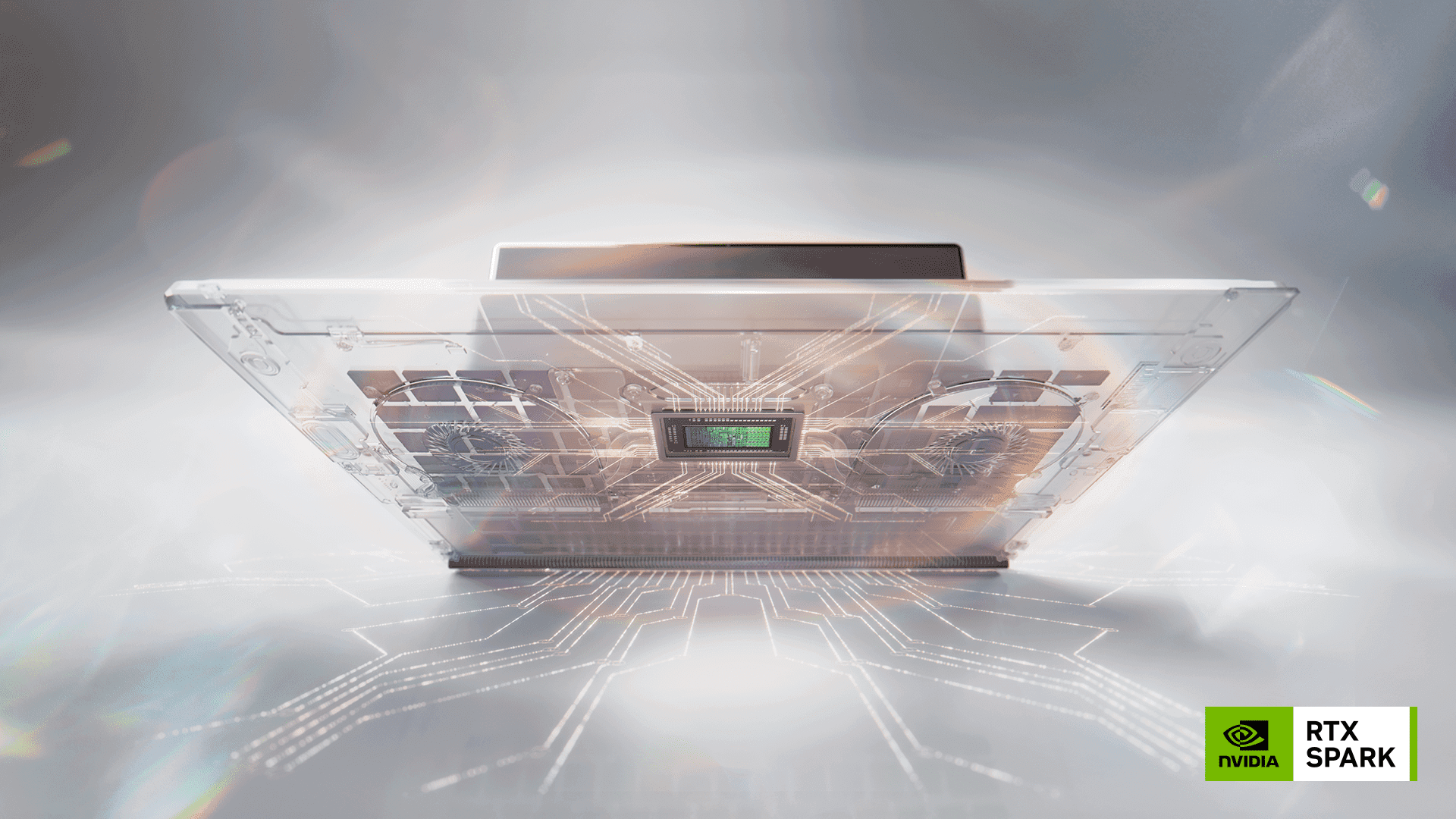
NVIDIA and Microsoft’s RTX Spark collaboration signals a new generation of Windows PCs built for local AI agents, private automation, creative workflows and large on-device models.
NVIDIA RTX Spark represents a major shift in how personal computers may be designed for the AI era. Instead of treating AI as a cloud service accessed through a browser or chatbot, NVIDIA and Microsoft are positioning RTX Spark Windows PCs as local AI agent machines capable of running advanced models, developer tools, creative workflows and automation systems directly on the device.
This matters because the AI PC conversation has often felt limited to small productivity features, background enhancements or lightweight assistant functions. RTX Spark pushes the category in a more serious direction by targeting developers, creators, power users and businesses that want local inference, private file-aware agents, large model memory, GPU acceleration and secure execution environments.
For AI users, the bigger question is whether the PC can become a true agent computer. If local agents can debug code, organize files, generate media, summarize private documents, automate workflows and remain available without constant cloud calls, the Windows PC could become a more powerful AI workspace than many browser-based assistants.
Local agents could make Windows PCs more private and useful
The strongest user benefit is local agent execution. A personal AI agent running on a PC can work with local files, project folders, documents, codebases and creative assets without sending every task to a remote model. That makes RTX Spark especially relevant for developers, creators and businesses handling sensitive or unfinished work.
Local does not automatically mean safe, but it gives users more control over where data lives and how often cloud services are involved. For workflows such as code debugging, video creation, research notes, private document summarization and desktop automation, that control can be a major advantage.
Coding, creative work and automation are the strongest use cases
RTX Spark is most compelling when the task needs both AI capability and local performance. Coding agents can inspect repositories, suggest changes, run checks and help debug software. Creative tools can generate images, video, effects or design assets. Productivity agents can organize files, summarize content and automate repetitive desktop tasks.
The combination of CUDA, RTX acceleration, Windows-native support and agent sandboxing gives developers a stronger foundation for building local-first AI apps. This may encourage a new ecosystem of AI tools designed specifically for powerful personal machines rather than only cloud APIs.
The big test is whether users actually need agent computers
RTX Spark is technically exciting, but the market question is still open. Many everyday users may not need a high-performance AI PC if cloud assistants already answer most questions, write basic text and summarize documents. The strongest early demand will likely come from developers, creators, researchers, AI builders and enterprise teams that can justify the local compute advantage.
Cost, battery life, software maturity, model compatibility and user trust will decide whether RTX Spark becomes a mainstream PC category or a premium tool for advanced AI users. NVIDIA and Microsoft need more than hardware performance; they need practical agent apps that make local AI feel useful every day.
What NexusAI users should watch next
NexusAI users should watch which RTX Spark PCs ship first, how much they cost, which models run well locally, and whether real agent workflows become easier than cloud-only alternatives. The strongest signal will be whether developers and creators actually build daily workflows around local AI agents.
The broader lesson is that AI tool selection is becoming hardware-aware. Users may soon compare not only ChatGPT, Claude, Gemini, Copilot, Cursor or local models, but also whether their laptop or desktop can act as a secure, always-on personal AI machine.