

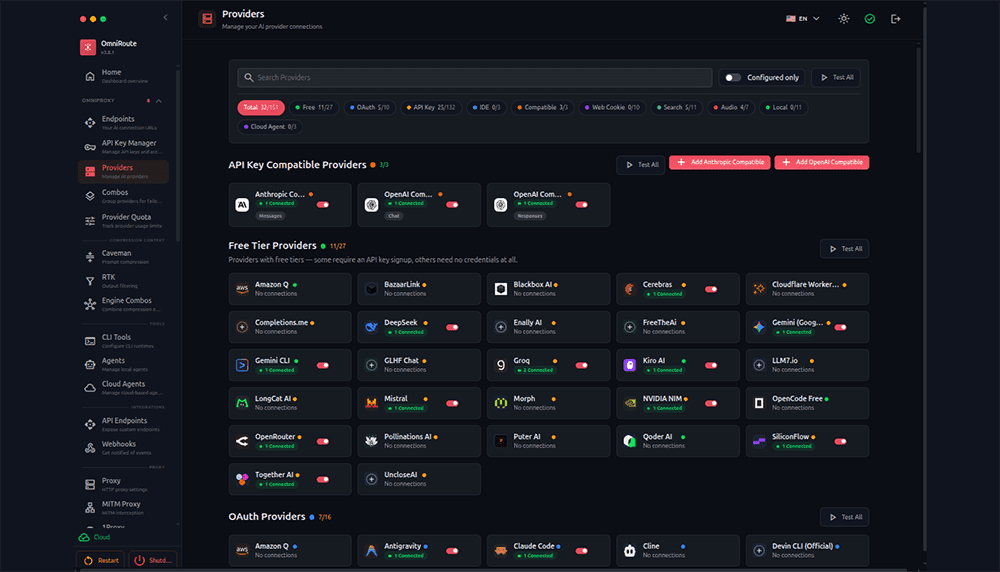
Most coding agents are only as reliable as their current provider quota. OmniRoute flips the architecture: treat providers as a pool and make routing the control plane. Behind a single OpenAI‑compatible URL, the gateway scores live providers on health, latency, cost, and quota headroom, then picks the best path per request. When a limit trips, it silently fails over. For developer tools like Claude Code, Cursor, Copilot, Cline, or homegrown CLI agents, that means one client config and dramatically fewer edge cases in production.
Where this matters financially is the combination of cost‑optimized strategies and token compression. OmniRoute’s routing can bias for cheap tokens or fresh headroom, and its compression stack strips verbose tool output and long traces before they hit the meter. Teams can also pin cache‑friendly prompts to the same target to maximize prompt‑cache savings. The result is not just resilience; it’s steadier unit economics when workloads oscillate between chat, tool calls, and long‑context code reviews.
Operationally, OmniRoute is appealing because it’s self‑hosted and MIT‑licensed. You keep keys and usage data local, gain telemetry via response headers, and can enforce per‑key budgets. The gateway adds guardrails for prompt‑injection and optional credential masking, and exposes media endpoints if your agents need OCR or audio. For platform leads, the governance win is standardization: consistent routing policy, a single integration surface, and clear blast‑radius limits when a provider changes pricing or throttles traffic.