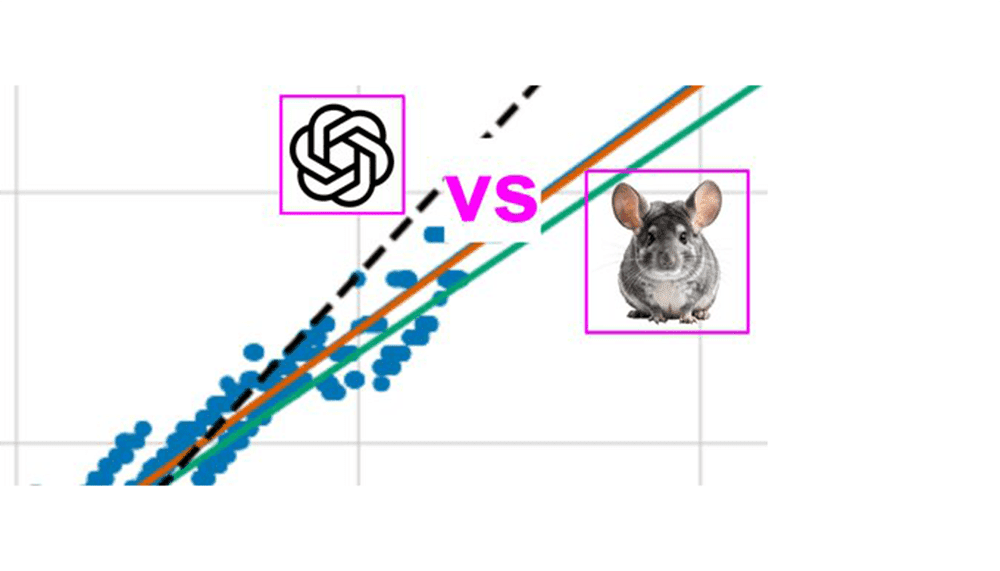
The debate over OpenAI’s early scaling law shows why frontier AI teams need stronger compute audits, training strategy reviews and reproducible model-economics assumptions.
The latest scaling-law debate is a reminder that AI infrastructure strategy depends on research assumptions. If a lab believes bigger models are the best use of a fixed compute budget, it will buy, allocate and schedule GPUs differently than a lab that believes better data balance is the key.
The controversy centers on the difference between OpenAI’s original scaling-law direction and DeepMind’s later Chinchilla result. The early recipe helped justify training very large models on relatively modest amounts of data. Chinchilla later argued that many large models were undertrained and that model size and data should scale together more evenly.
The exact amount of wasted compute is difficult to verify publicly, but the larger lesson is clear. In frontier AI, a small methodological assumption can redirect millions of dollars of compute, shape product timelines, influence model architecture and affect the economics of every downstream AI tool.
Why scaling laws became so influential
Scaling laws matter because they turn messy model-training decisions into a planning framework. A lab can estimate how performance may improve as it increases model size, dataset size and training compute. That makes scaling laws useful for budgeting, cluster planning, model roadmap design and investor narratives about future capability.
The danger is that scaling laws can start to feel more certain than they are. They are not physical laws. They are empirical curves fitted to specific experiments, datasets, model families, training recipes and measurement choices. When the setup changes, the conclusions may shift.
The bigger issue is compute governance
The most important lesson is not whether one paper was wrong. The lesson is that frontier AI compute needs governance. Before committing huge GPU budgets, teams should audit assumptions, reproduce key fits, test alternative schedules, evaluate data mixtures and separate local experimental conclusions from general laws.
This is especially important as AI training runs become larger and more expensive. A flawed assumption can waste not only money, but time, energy, opportunity and scarce infrastructure. The more expensive the training run, the more valuable pre-training audit discipline becomes.
What AI builders and tool buyers should learn
For AI builders, the takeaway is to treat scaling claims as hypotheses, not guarantees. Teams should measure cost per quality improvement, cost per token served, data efficiency, model utilization and whether larger models actually improve the user workflows that matter.
For AI tool buyers, the lesson is more indirect but still important. Model providers with better compute discipline may be able to deliver lower prices, faster models, better rate limits and more sustainable product roadmaps. The best AI tool is not always backed by the biggest model; it may be backed by the best training-economics strategy.