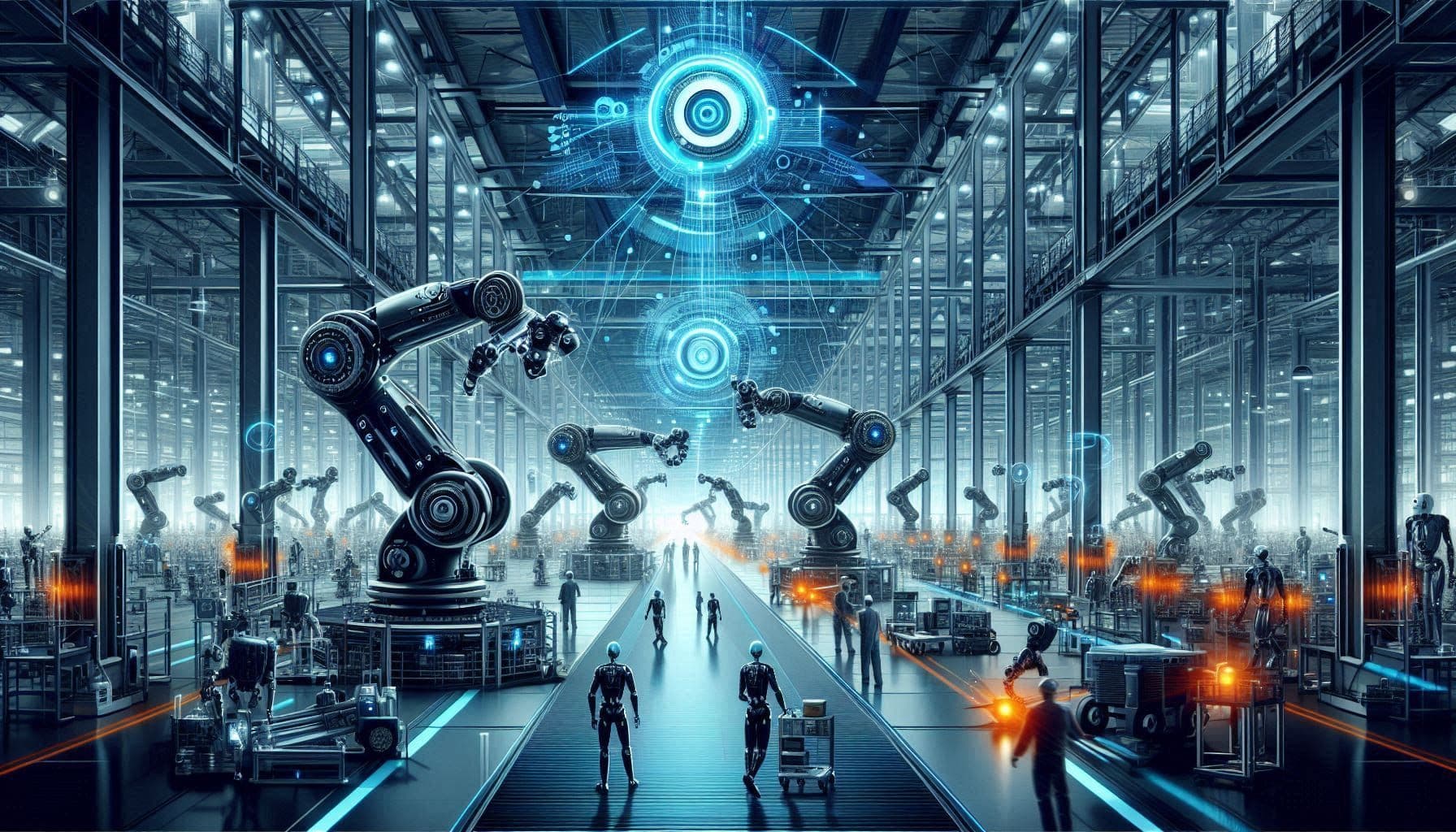
Physical AI is bringing perception, reasoning and adaptive learning into robots, factories and machines that must operate safely in the unpredictable real world.
Most widely used AI operates inside software, producing text, images, code or recommendations. Physical AI moves intelligence into machines that must understand space, manipulate objects, navigate environments and respond to people while respecting the physical consequences of every action.
Industrial robotics already has a large global foundation. More than 500,000 industrial robots have been installed annually for several consecutive years, and worldwide factory demand has more than doubled over a decade. The emerging change is not simply adding more machines, but making those machines more adaptable to variable products, locations and operating conditions.
This transition is creating a new technology stack spanning sensors, robot hardware, simulation, synthetic data, foundation models, edge computing and fleet management. Manufacturers, logistics companies and robotics developers are now evaluating how these layers can automate tasks that were previously too unpredictable for conventional systems.
Physical AI connects perception, reasoning and action
A physical AI system must transform sensor input into safe action. Cameras, force sensors and other devices provide information about the environment. Models interpret that information, connect it with task objectives and generate actions for motors, manipulators or vehicles.
Unlike a chatbot, a robot cannot simply regenerate an answer after a serious mistake. It must account for geometry, timing, force, uncertainty and nearby people. This makes perception accuracy, control systems, safety boundaries and predictable fallback behaviour as important as general model intelligence.
Factories are moving beyond rigid automation
Traditional industrial robots perform repetitive tasks extremely well when products and environments remain consistent. Reprogramming a production line for a new component, layout or process can require specialist engineering, new fixtures and significant downtime.
Physical AI aims to make the same hardware useful across a wider range of tasks by changing its learned control policies. Robots that can recognise unfamiliar objects, respond to natural-language instructions and adapt their movements could support mixed production, irregular assembly, warehouse handling and factories that change products more frequently.
Simulation is becoming the training ground for robots
Collecting physical training data is slow, expensive and potentially dangerous. Digital twins and physically accurate simulation allow robots to practise tasks thousands of times under different lighting, layouts, object positions and failure conditions before being deployed.
World models and synthetic-data systems extend this approach by generating varied environments and demonstrations. Real fleet performance can then feed new information back into simulation, creating a cycle in which robots are trained virtually, validated physically and continuously improved from operational data.
Humanoids are only one part of the physical AI market
Humanoid robots attract attention because factories, warehouses and tools were designed around human bodies. A general-purpose machine that can walk, carry and manipulate objects could theoretically enter existing workplaces without rebuilding every process.
Many valuable deployments will still use specialised forms. Robot arms, mobile warehouse platforms, autonomous vehicles, surgical systems and inspection machines can be safer, cheaper and more efficient for defined tasks. Businesses should select the embodiment that matches the workflow rather than assuming a humanoid is automatically the most advanced solution.
The hard problem is reliable deployment at scale
A successful demonstration does not establish production readiness. Companies must measure task success, cycle time, intervention frequency, uptime, maintenance cost, energy use and performance across unusual conditions. Physical AI also expands cybersecurity risk because compromised software can affect machinery and safety systems.
Workforce planning must develop alongside deployment. Robots may reduce dangerous or repetitive work, but automation can also displace roles and change required skills. Strong adoption programmes involve workers early, redesign processes around human and machine strengths, establish accountability and invest in technicians who can supervise, maintain and improve intelligent systems.