

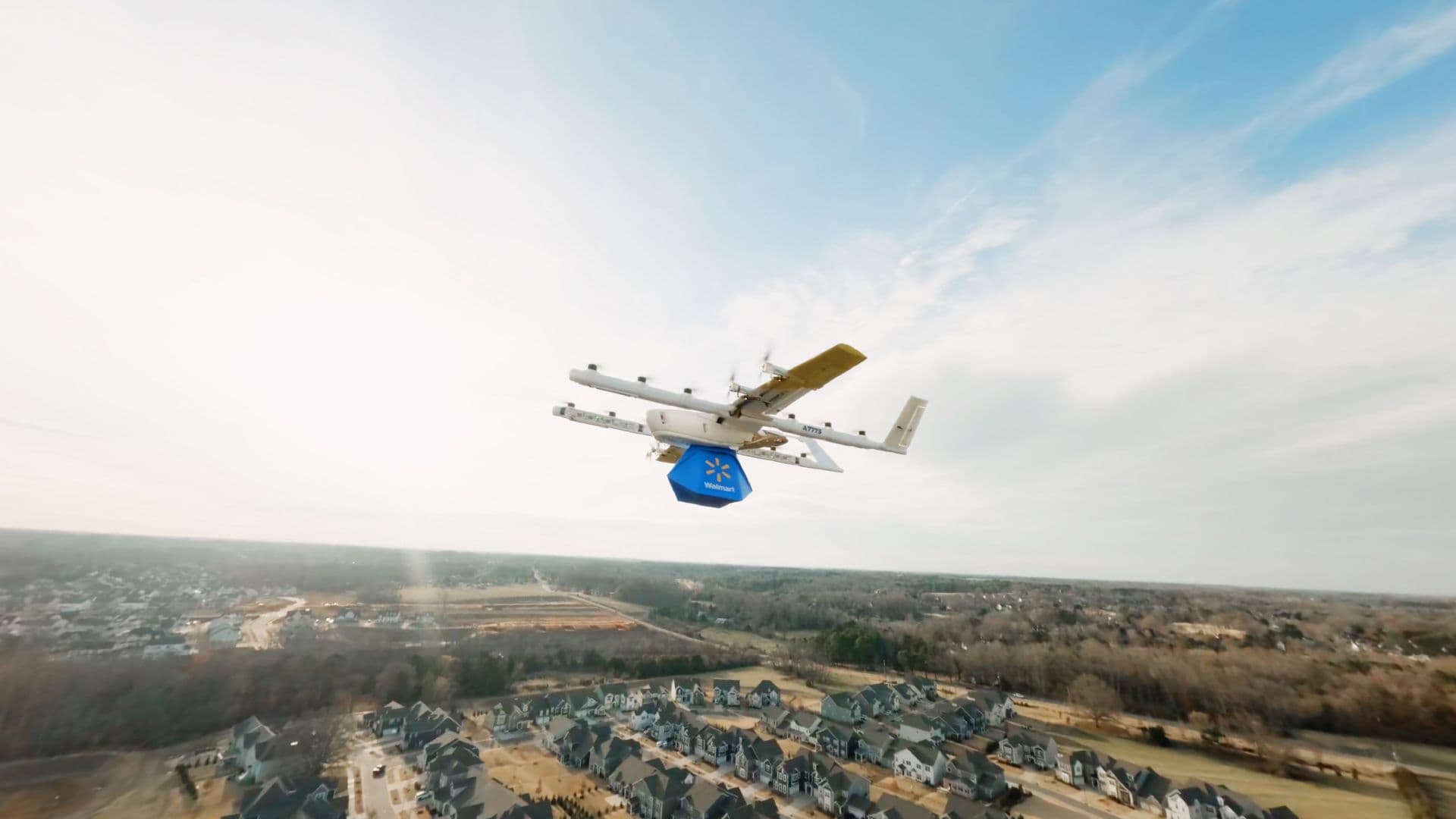
Walmart’s latest drone delivery expansion is less about a futuristic headline and more about a practical retail infrastructure bet. By extending service into Atlanta, Charlotte, Houston, Orlando and Tampa, the company is signaling that autonomous last-mile delivery can become a repeatable model for high-frequency retail categories.
The most important signal is scale. Walmart has already completed more than 150,000 drone deliveries since launching the service in 2021, giving it operational data across product mix, customer behavior, weather constraints, store workflows and delivery density. That experience makes the new rollout feel less experimental and more like a step toward a broader fulfillment network.
For customers, the value proposition is simple: small, urgent baskets delivered in minutes. For Walmart, the strategic upside is deeper. Drone delivery can turn stores into distributed micro-fulfillment nodes, reduce friction for forgotten items, and strengthen the company’s promise of speed and flexibility without relying solely on road-based delivery capacity.
The expansion also reflects a broader shift in retail AI and automation. Competitive advantage is increasingly built through orchestration: matching inventory, demand signals, delivery method, customer location and time sensitivity in real time. Drones are one visible layer of that system, but the larger story is the intelligent routing of convenience.