

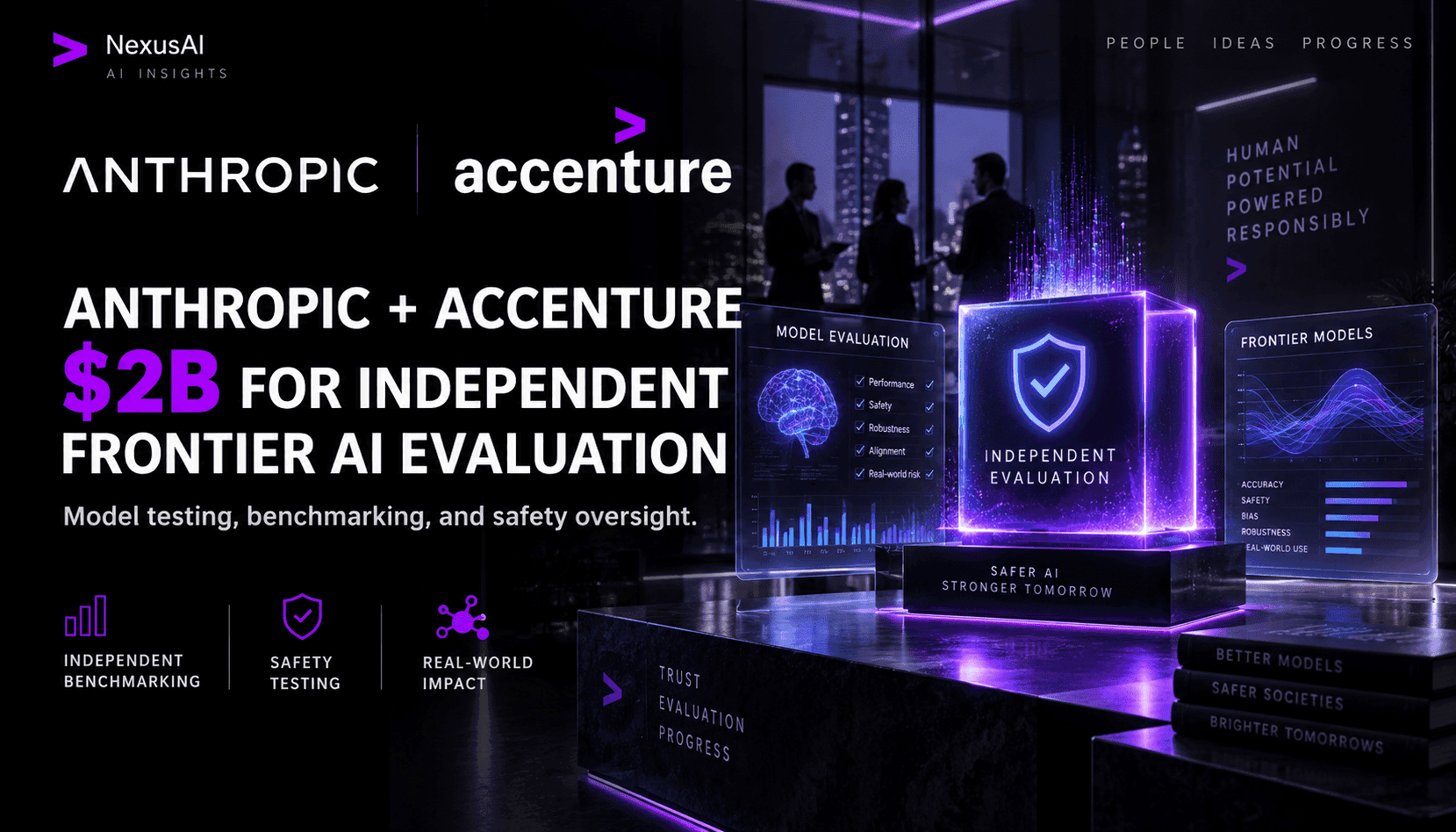
A $2 billion commitment to independent frontier model evaluation is more than a funding headline—it crystallizes evaluation as its own market layer alongside models, agents, infrastructure, and security. Until now, most enterprises stitched together homegrown benchmarks, scattered red‑team scripts, and occasional third‑party tests. Capital at this scale suggests evaluation will professionalize into standardized services, referenceable certifications, and buyer‑ready reports that translate technical behavior into operational risk and contractual terms.
For enterprises, the shift is practical: evaluation becomes a gating function, not a post‑hoc slide. Expect RFPs to require independent safety, robustness, privacy, and model‑risk attestations; SLAs to include durability under prompt stress, jailbreak resistance, content safety thresholds, retrieval faithfulness, and incident response times; and governance committees to anchor approvals to third‑party metrics rather than vendor narratives. If implemented well, evaluation tightens AI change control, accelerates audits, and lowers the cost of assurance for regulated deployments.
The industry effects will reverberate across the stack. Model labs gain a channel to validate claims without handing away IP; systems integrators formalize evaluation as a billable workstream; startups focused on red‑teaming, watermark and provenance checks, bias and toxicity scoring, and cost/latency profiling find a distribution on‑ramp. A credible ecosystem also enables insurers to price AI risk and regulators to reference harmonized evidence, creating pull‑through demand for continuous, not one‑off, evaluation subscriptions.
The catch is independence. Whoever pays for evaluation influences scope, cadence, and disclosure. To avoid capture, buyers should require transparent methodologies, versioned test suites, evaluator conflict disclosures, reproducibility artifacts, and the right to re‑test on their own data slices. In parallel, integrate evaluation into CI/CD so every model update ships with a diff of safety and performance regressions, and tie operational controls—like higher‑risk tool use or external actions—to passing scores.