
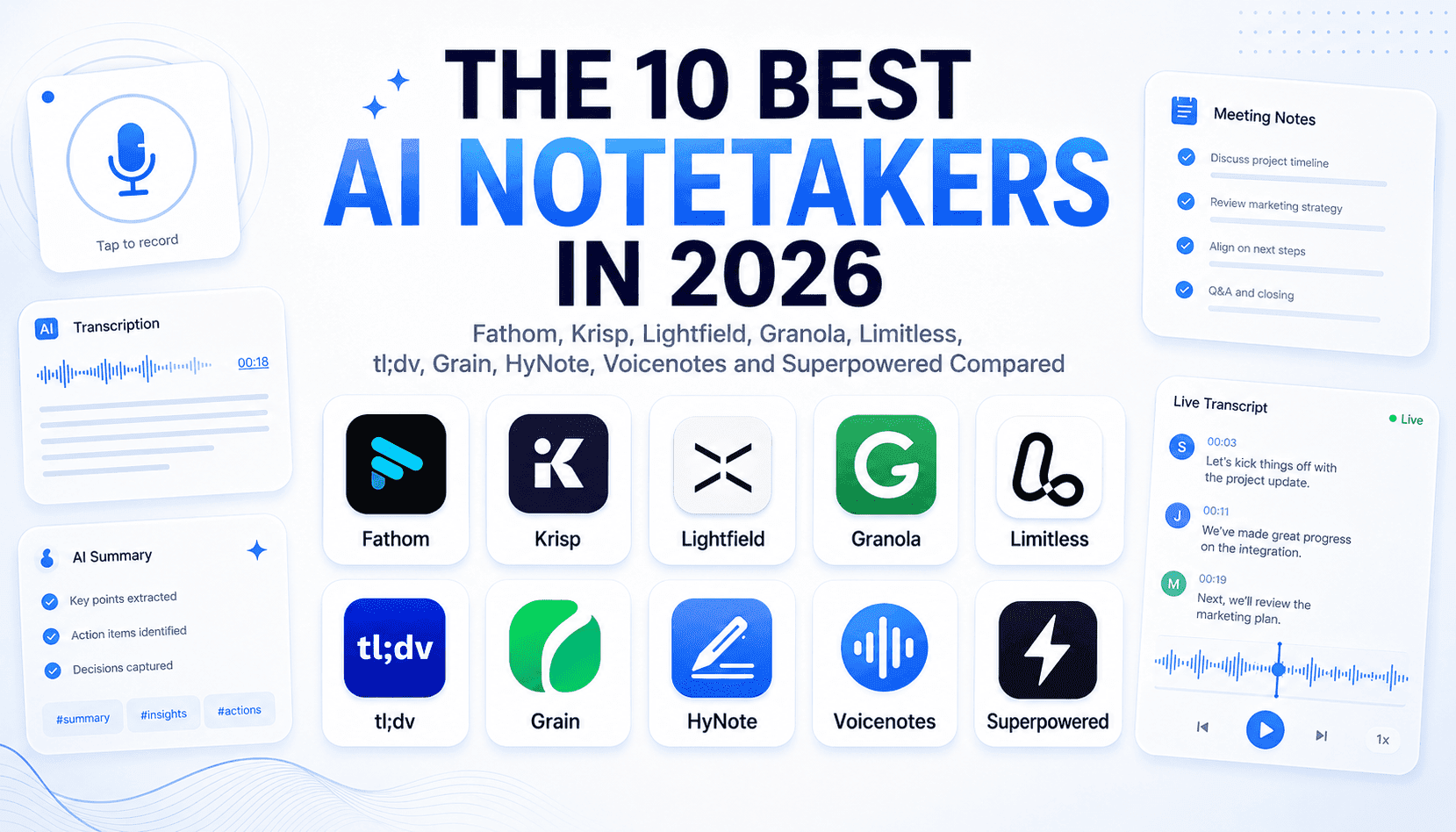
AI notetaking has split into three viable paths in 2026: bot joiners that appear on Zoom/Meet, background recorders that capture from your device without joining the call, and on-device-first apps that minimize cloud exposure. Across that spectrum, the winners pair strong speech accuracy with real-time structured notes, robust action extraction, and memory that’s actually searchable across calls. In this guide we compare ten tools—Fathom, Krisp, Lightfield, Granola, Limitless, tl;dv, Grain, HyNote, Voicenotes, and Superpowered—through the lens of accuracy, latency, privacy, CRM sync, and automation so buyers can align capabilities with role, risk, and workflow.
Accuracy and speed still differentiate. Multilingual coverage is now table stakes, but diarization quality, accent robustness, and the fidelity of live notes versus full transcript summaries separate premium products from commodity STT. On the workflow side, sales and recruiting teams value tight CRM mapping, auto-created tasks, and call snippets; founders want fast catch-up and memory search; privacy-first orgs need on-device capture, granular retention, and consent tooling. The right choice depends as much on data handling and downstream integration as it does on the model powering transcription and summarization.
From our testing rubric, top performers do four things consistently: produce reliable moment-to-moment notes without waiting for end-of-call summaries; extract actions with owners and due dates; map entities (accounts, candidates, tickets) correctly into CRM/ATS; and make past conversations retrievable by topic, decision, and commitment. Fathom, Grain, and Lightfield lean into sales and revenue workflows; Granola, HyNote, and Krisp emphasize device-centric capture and privacy; tl;dv and Superpowered optimize asynchronous catch-up; Limitless and Voicenotes push into personal knowledge and multilingual coverage. The sections below unpack trade-offs and role-based picks.