

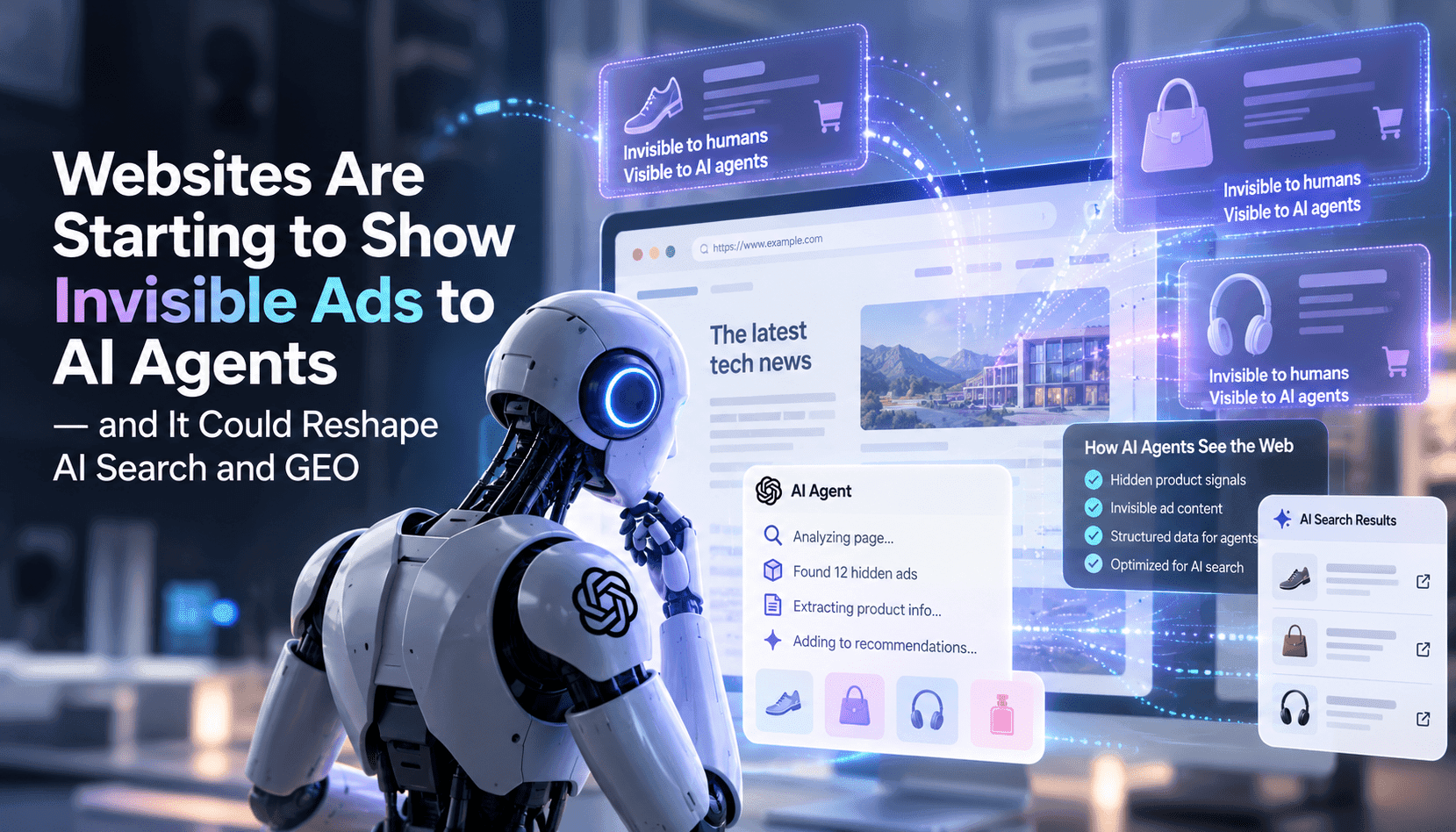
A new form of targeting has emerged: publishers crafting content that only AI agents and crawlers can read. Unlike conventional native ads or sponsored posts that users see, these placements live in agent-readable channels — JSON-LD, alternate user-agent flows, hidden schema blocks, or API endpoints — designed specifically to influence what assistants surface when answering queries or making local recommendations. The technique is not just clever SEO; it deliberately separates the human experience from the machine-facing view and weaponizes the assistant discovery layer to deliver sponsored outcomes.
Technically, publishers implement agent-only ads by exposing structured data or curated snippets conditioned on request headers, user-agent strings, or bot verification tokens. They can insert sponsored product details, preferred locations, or prioritized claims into schema.org blocks, FAQ sections, or dedicated API responses. Because many assistants and knowledge graphs ingest structured data for summarization and ranking, those agent-visible insertions can disproportionately influence which businesses, facts, or routes appear in answers — often without visible disclosure to the end user.
Some AI platforms have started to push back: blocking user-agent spoofing, ignoring unverified agent-only feeds, and weighting human-rendered content more heavily. The countermeasures are pragmatic but imperfect. Blocking can create false negatives (legitimate crawlers) and overemphasis on rendered pages penalizes sites that publish valuable structured feeds for accessibility or developer integrations. Platform walls and authoritative provenance signals will become battlegrounds: who controls the trust layer — publishers, platforms, or third-party validators — will determine whether these ads become a stable channel or a short-lived exploit.
For GEO and AI search, the stakes are concrete. Agent-visible ads could distort local rankings, send searchers to higher-margin but lower-quality providers, and change traffic flow away from organic discovery. For brands and operators, this is both an opportunity and a liability: early adopters can buy disproportionate visibility with modest investment, while incumbents who rely on human-facing SEO may find their AI referral streams eroded. Investors and product teams should model both upside — new low-cost acquisition channels — and downside — reputational risk, regulatory cost, and platform delisting.