

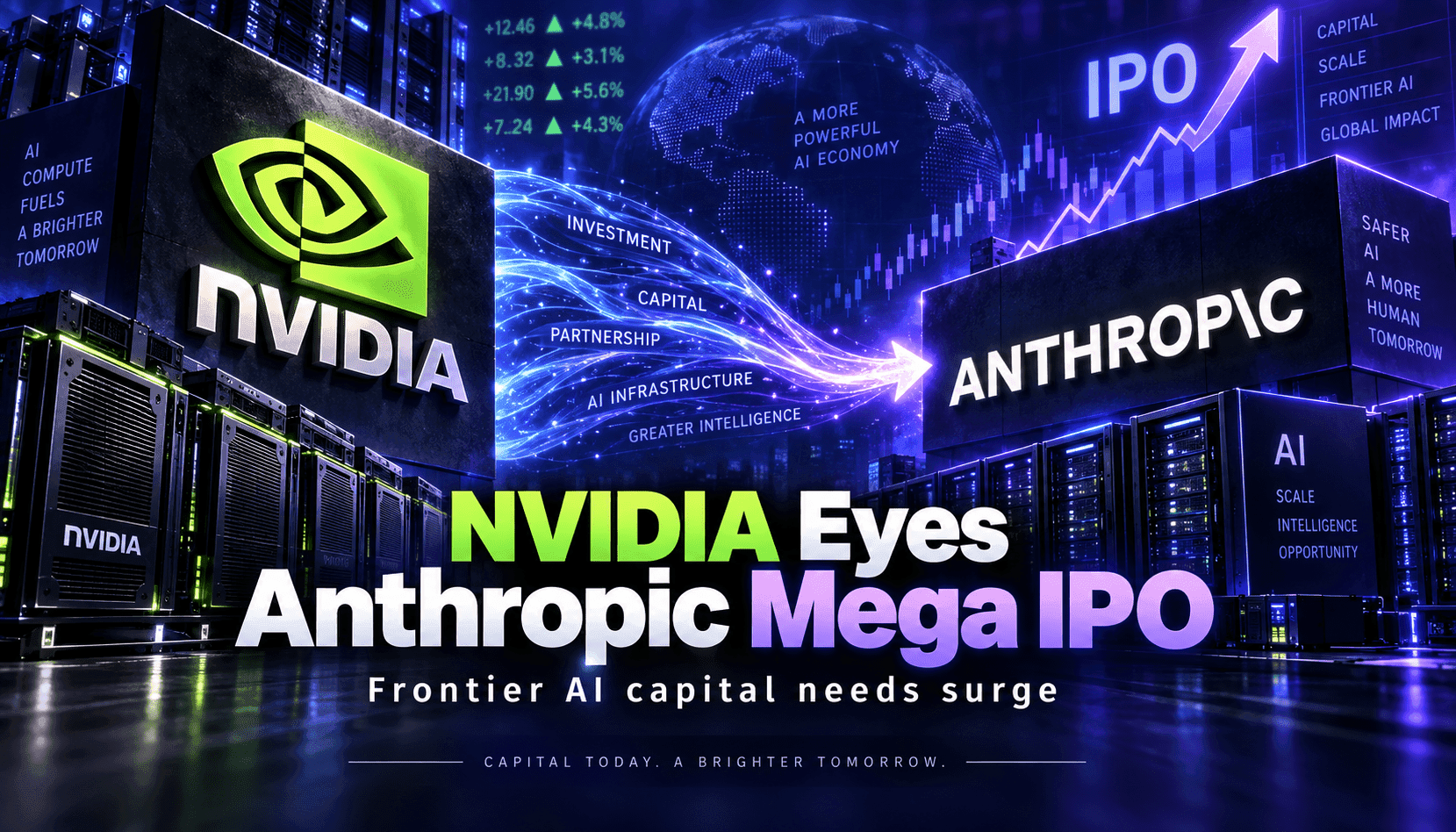
NVIDIA’s potential anchor role in Anthropic’s landmark IPO would be more than a headline financing event; it would be a structural bet on the economics of frontier AI. Anchor investors help set momentum for large offerings and often bring strategic alignment. Here, the alignment is obvious: Anthropic needs scale compute to push model quality and inference reach, while NVIDIA benefits from multi‑year visibility into demand and from tighter integration with a top model customer. If the reported terms materialize, they would normalize IPO‑era supplier anchoring in AI—blending capital markets signaling with future capacity assurance.
The compute–capital–model feedback loop works like this: cheaper or earlier access to GPUs accelerates training; better models expand monetization and justify more capital; that capital, in turn, reserves more compute. An anchor stake could compress this loop’s cycle time. For buyers, that may translate into earlier access to higher‑capability Claude models and stronger SLAs tied to specific GPU generations. For rivals, it raises the bar on securing comparable capacity and financing, increasing pressure to prepay for compute, pursue custom silicon, or deepen cloud co‑investments. Expect cloud partners to sharpen reserved‑capacity offers and attach usage commitments to pricing relief.
The capital intensity here is extraordinary: multi‑year, multi‑gigawatt training clusters; long‑lead supply; and potential prepayments that move AI capex onto customers’ balance sheets. If an anchor investor also supplies the critical component (GPUs), it may stabilize execution risk but concentrates exposure. Watch for mechanisms in the IPO filings that hedge volatility—capacity options, diversified chip roadmaps, or co‑location with clouds for power availability. On pricing, an anchor dynamic can support predictable lanes for H/Hopper/Blackwell‑class parts, though enterprise buyers should assume demand outstrips supply through 2027. Pragmatically, lock in reserved inference capacity, diversify across providers, and budget for intermittent spot scarcity.