

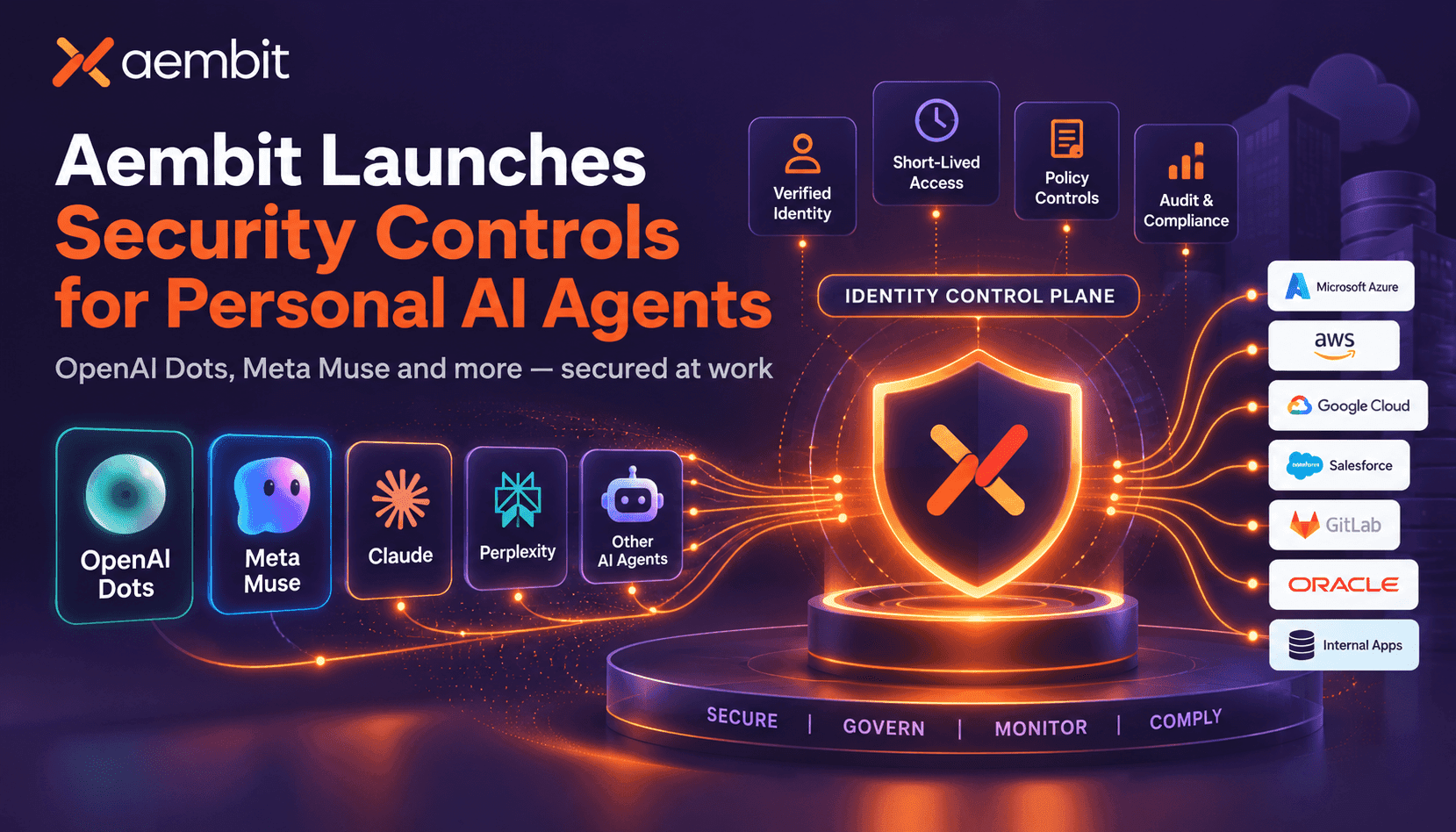
Personal AI assistants—examples include OpenAI Dots, Meta Muse and several vendor-specific agents—are already entering daily workplace routines. The fundamental security problem is simple: when an agent inherits an employee’s long-lived credentials it gains broad, persistent access that security teams did not provision, cannot fully observe, and cannot easily revoke without impacting the human user. Aembit's approach reframes that problem by giving each agent its own identity, applying policy at the moment of access, and issuing timebound credentials that expire as tasks complete.
Giving an agent a separate identity changes how enterprises manage authorization, auditing, and incident containment. Instead of hunting for leaked tokens or resetting employee accounts, teams can revoke a single agent identity and preserve the employee’s productivity. That isolation is critical because agents can act across many systems at once—email, code repositories, SaaS applications and internal services—and those actions must be visible and attributable in the audit trail for compliance and forensics.
Aembit built this capability into its existing identity control plane so customers do not need a parallel product stack. The platform validates who the agent is, who it is acting for, and the exact resource requested, then issues short-lived, scoped credentials for enforcement points to consume. Those enforcement points can be Aembit’s gateway or existing gateways the customer already runs, preserving investment while standardizing identity and policy across the enterprise.
The practical upshot for operators is straightforward: enforce least privilege by default, minimize standing credentials, and gain the ability to instantly quarantine misbehaving agents without disrupting an employee’s access. That operational model reduces blast radius, simplifies audits, and makes it feasible to embrace agents as productivity tools rather than treating them as an uncontrolled security risk.