

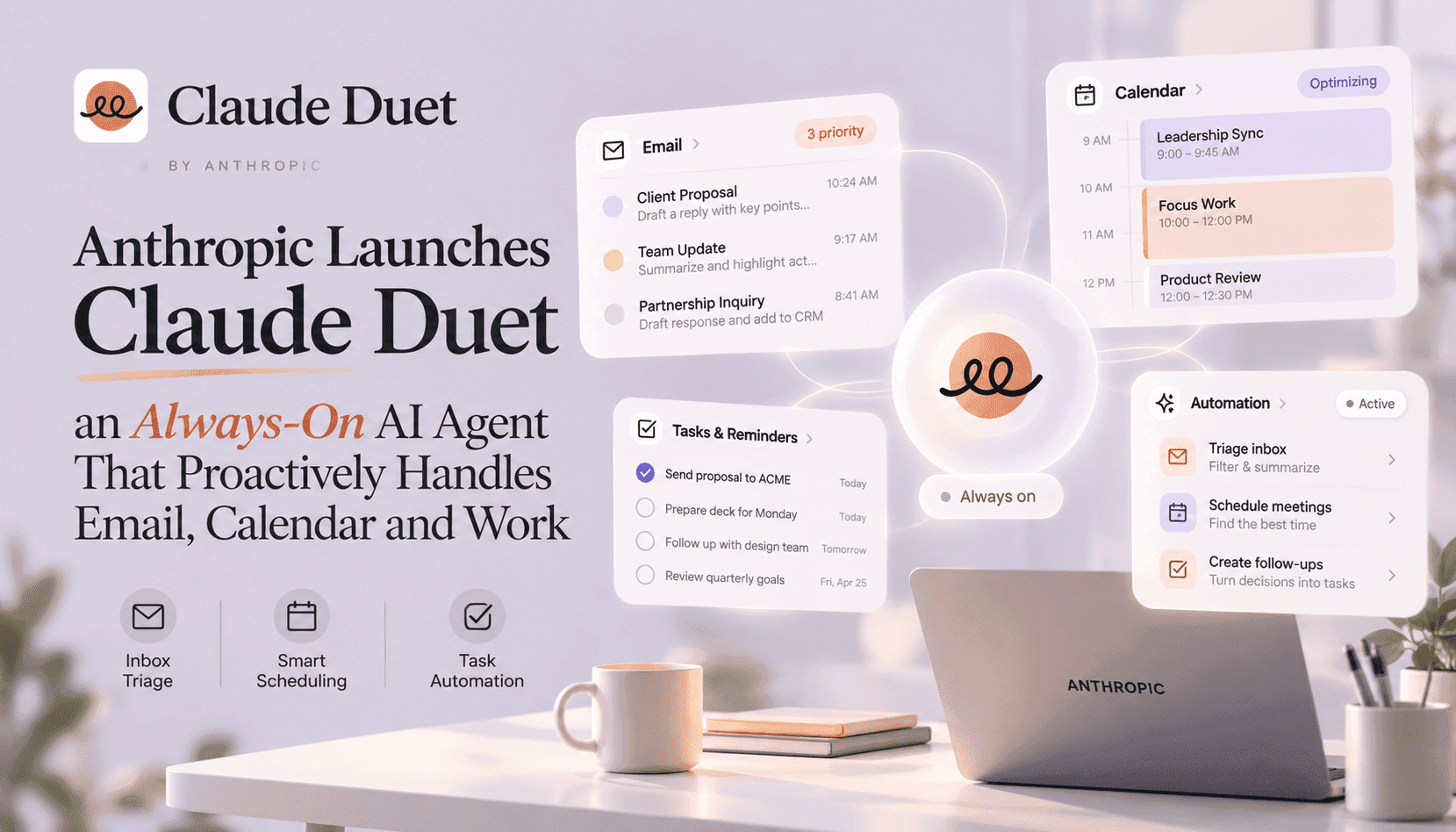
Claude Duet is not a new chat window; it’s a backgrounded collaborator designed to notice and act. Rather than waiting for prompts, Duet checks connected apps periodically, compiles morning briefs, and prepares drafts or actions that it only executes after explicit confirmation for high‑impact steps. That change in flow reframes value: the product sells time and attention management rather than just faster answers. For professionals juggling inboxes, schedules, and multi‑tool workflows, the practical advantage is fewer context switches and a single conversational thread that can represent tasks from a five‑minute reply to an ongoing project.
Under the hood, Duet uses a persistent VM with browser automation, connectors to thousands of services, and an approvals pipeline that separates drafting from execution. The platform carries memories, skills, and connected apps from a user’s Claude account so setup is lightweight. But persistence introduces new product constraints: background checks count against plan usage, frequent polling can inflate cost, and judgment about what merits interruption is still being tuned. For teams, these operational limits matter — they determine how broadly the agent can be deployed before costs outweigh productivity gains.
Anthropic foregrounds safety: Duet has a dedicated classifier and safety prompt to block the strictest information leaks, a design that avoids direct access to raw credentials by integrating with managed token flows, and an auto‑mode classifier that gates actions. These protections are practical but not exhaustive. Persistent agents increase the attack surface — automated sign‑ins, saved tokens, and cross‑app actions create complex permission surfaces that must be audited continuously. Security teams should treat Duet as an application integration and apply standard lifecycle controls, logging, and least‑privilege policies.
Viewed strategically, Duet exemplifies the industry move from conversational assistants to persistent agents that can close loops autonomously but still defer certain decisions to users. Compared with OpenAI Dots and Meta Muse, Duet emphasizes sustained context and a marketplace of connectors tied to business workflows. Dots focuses on quick, composable actions and Muse centers on multimodal assistance; Duet’s differentiator is operational continuity — it keeps working when you’re offline. That difference will shape buyer decisions: organizations needing ongoing monitoring and orchestration will prefer Duet’s model, while ad hoc creative or burst tasks may be better fit for alternatives.