

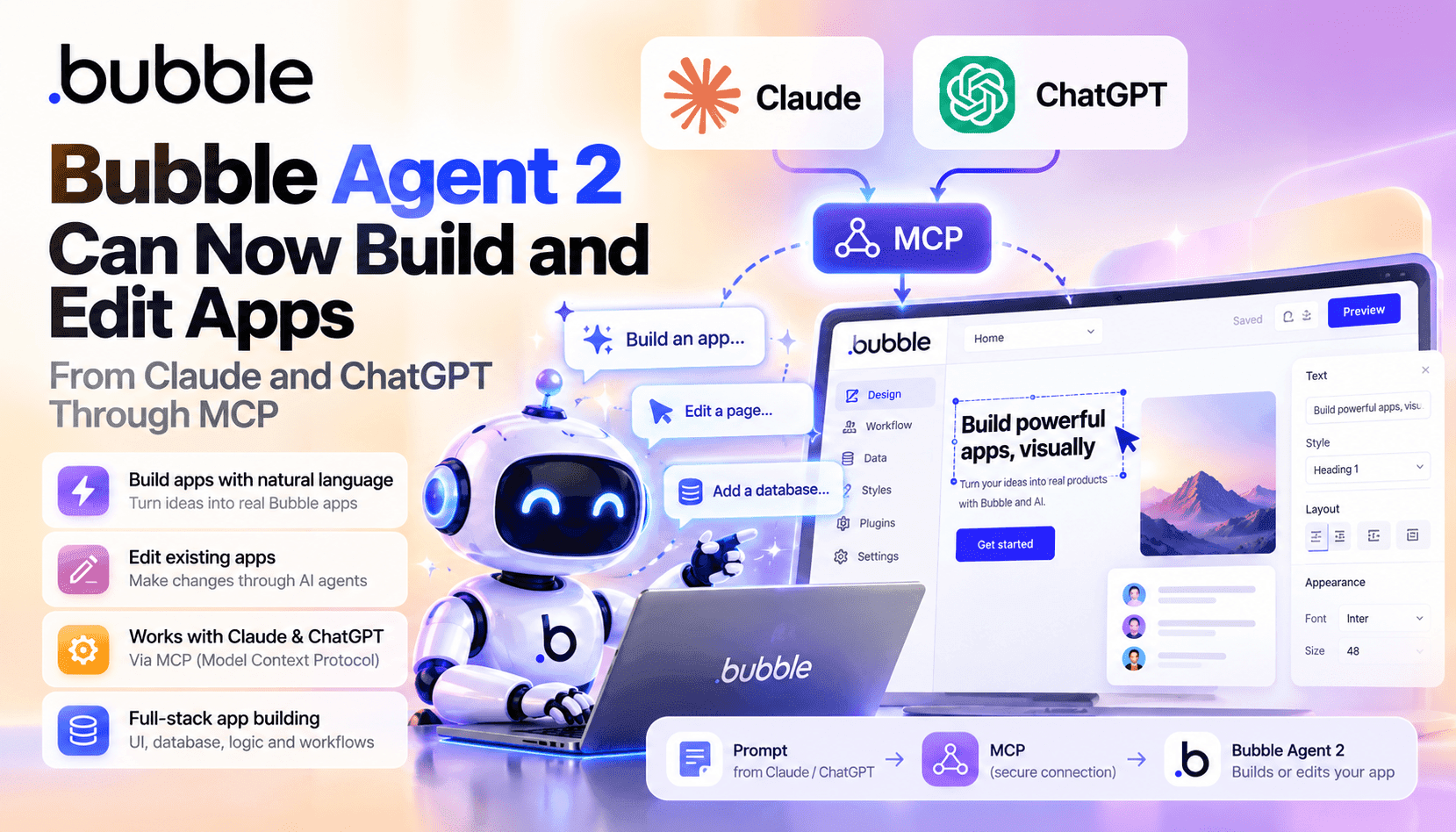
Bubble’s October demos position two linked changes—Agent 2 and the MCP—as a meaningful pivot in how non‑engineers and hybrid teams build. Agent 2 is a rebuilt assistant that treats complex requests as projects: it asks follow-ups, sketches a plan, and waits for approval before touching a live editor. The MCP (beta) makes that editor reachable from external LLMs such as Claude and ChatGPT, so you can ask another model to inspect a running app and add pages or UI elements directly. Together they blur the line between “AI prototype” and a maintainable visual app.
In practice Agent 2’s workflow reduces the risk that a single ambiguous prompt will produce broken features. For multi-step features it now: identify gaps via clarifying questions, propose a discrete step plan, execute items after explicit approval, and then run internal checks (issue scanning and screenshots). That sequence matters for scale because it forces human review at defined gates, and the Agent’s preview-in-editor feature improves discoverability—builders can see changes as the Agent would, then probe or roll them back in context.
MCP’s ability to let external LLMs create pages and elements inside a live Bubble project changes team composition and tool choice. Teams can now use Claude, ChatGPT, or other assistants as a front-end designer/developer that writes directly into Bubble’s visual model. That opens practical paths: import a vibe-coded prototype from another AI tool via MCP and then hand off to Bubble for maintainability; or treat Bubble as a canonical execution surface where different agents implement features following a shared schema.
The implications matter for product teams deciding where to centralize production. Compared with vibe-coding platforms that generate one-off code, Bubble’s editor + MCP promises a more durable surface: visual workflows, data models, and reusable elements remain editable by humans. But that promise depends on Agent discipline (clear plans and tests), governance controls around which agents can write to a project, and billing transparency as workload grows. In short: the tech makes a new workflow possible; operational guardrails determine if it’s sensible for production.