

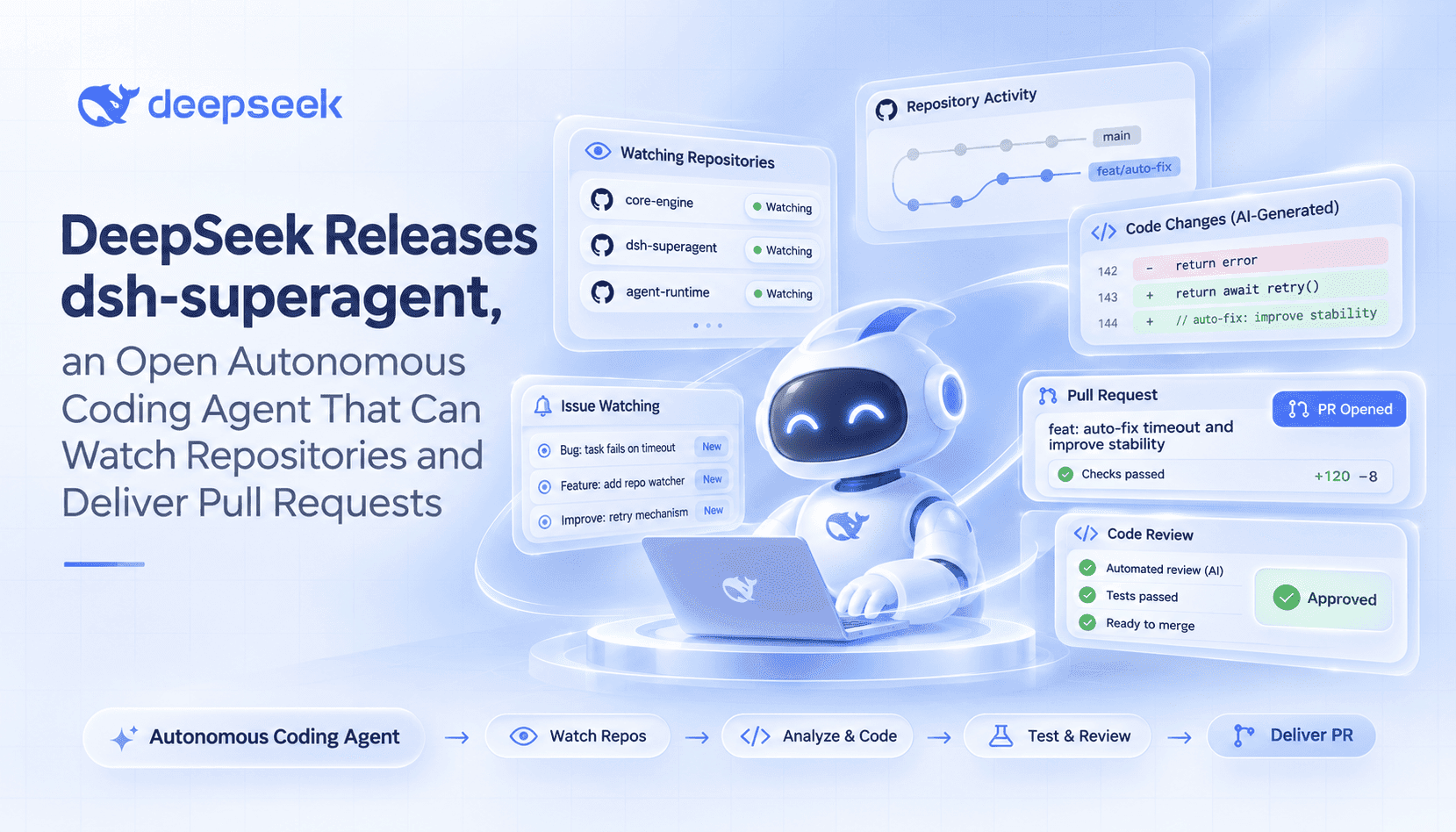
DeepSeek’s newly published dsh‑superagent prototype is not another chatty coding assistant; it’s an attempt to run an agent continuously at the repository level. Rather than waiting for a user prompt, the system listens to GitHub events and authorized conversations (Feishu optionally) and can open a work item, spin up an isolated agent session to complete tasks, and return concrete artefacts like pull requests. The repository is packaged as a bundle for DeepSeek Harness, but the key idea is architectural: agents that operate persistently around a codebase and escalate only when human action is required.
Technically, dsh‑superagent separates authorization, execution, and human interaction. When an allowed request arrives, the prototype creates a self‑contained agent session and working directory, runs the skill set needed to fulfill the item, and produces changes that can be inspected and merged through GitHub. A lightweight web panel surfaces situations that need human attention—conflicts, ambiguous design decisions, or tests that fail—so the agent minimizes interruptions. The pattern designers emphasize: act only when rules permit or when prompted; speak only when a person must act or can use a result.
DeepSeek frames this repo as research code. The README and documentation are explicit: dsh‑superagent grew from day‑to‑day engineering and agent‑assisted work, and it may contain inconsistent engineering practices and bugs. That candid position matters: it allows the project to surface architectural choices—authorization models, isolated execution, lifecycle management, and panel UX—without promising enterprise‑grade stability. For builders and evaluators, the repository is a live blueprint for how to orchestrate agent sessions safely and efficiently, not a drop‑in product.