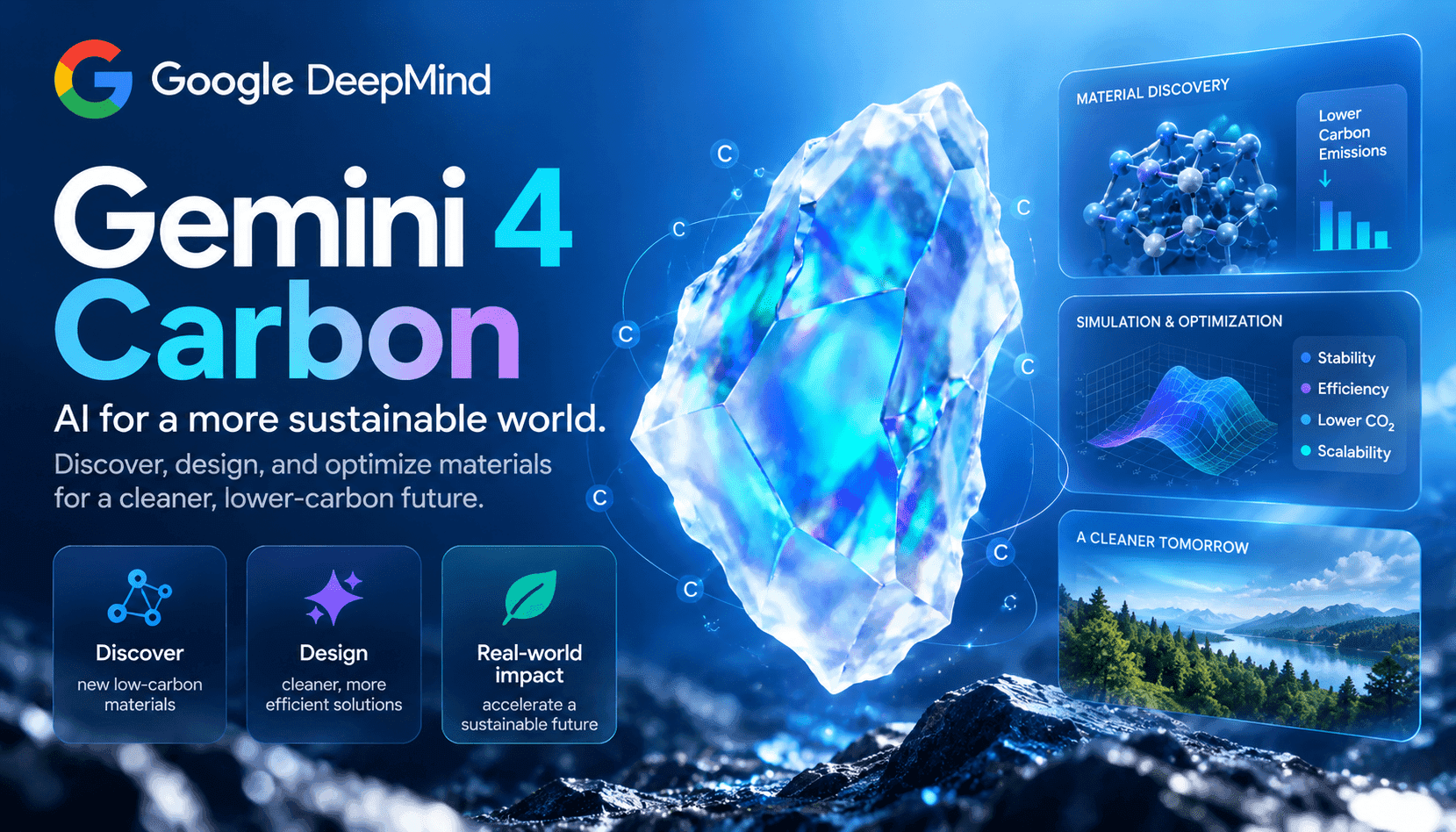
Google positions Gemini 4 Carbon as a distinct frontier model aimed at long-horizon engineering and cybersecurity workflows. According to Google's official Gemini 4 Carbon announcement, the model focuses on complex, multi-step technical tasks. The company reports Carbon ranking first on an internal Artificial Analysis Intelligence index and large percentage gains on benchmarks for vulnerability finding, exploitation, and patching versus the recently released Argon. Beyond headline scores, Carbon’s design premise is a model that can stay “on the problem” for days, iterating through dead ends and weaving together reasoning, tool use, and code edits across large codebases. That promise is the model’s strategic differentiator.
For enterprise security and engineering teams the practical question isn’t peak benchmark placement but whether Carbon sustains correctness and traceability across multi-step workflows. Google’s internal reports — double-digit improvements in patch quality, lower hallucination rates, and stronger prompt-injection resistance — are encouraging signals. Still, independent validation is essential, especially where automated exploit validation and root-cause patching will touch production services. Security teams should plan staged red-team evaluations, targeted exploit reproduction tests, and full CI integration trials before routing high-stakes remediation to model-assisted pipelines.
Carbon’s rollout and pricing reflect a cautious commercial strategy: immediate, limited access for vetted cyber defenders through Google’s Fairwind Program, then broader developer availability. The introductory pricing — $2 per million input tokens and $10 per million output tokens — undercuts many frontier price points on the output side and mirrors the earlier Argon launch tiers. For buyers this matters: the effective cost of agentic workflows is dominated by output tokens over long-horizon runs, and cached input discounts further tilt economics for repeat runs within systems that can reuse prompts.