

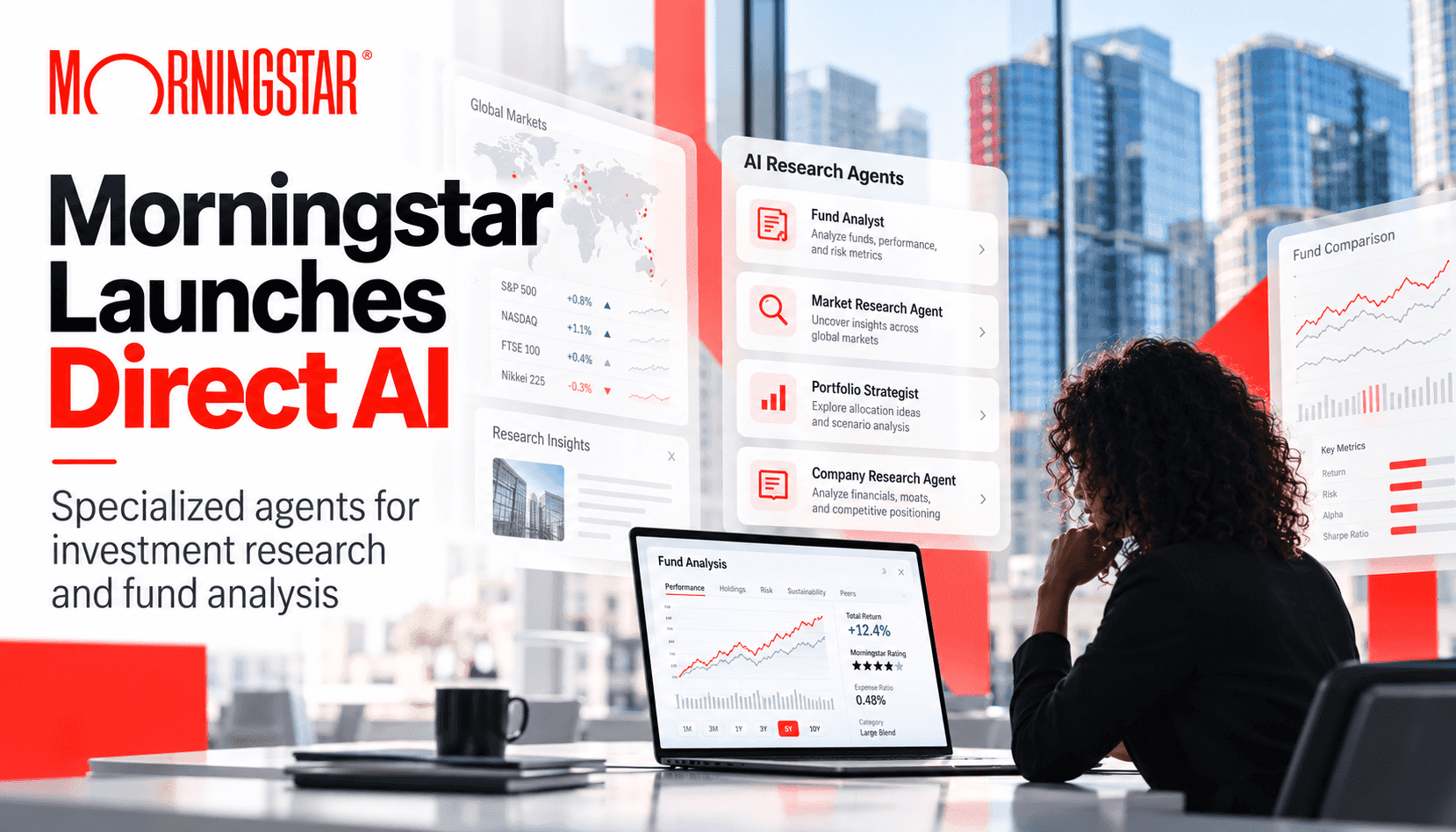
Morningstar’s Direct AI reframes a perennial vendor promise — “data plus models” — into a productized agent platform aimed squarely at investment professionals. Rather than delivering a generic assistant with access to Morningstar data, Direct AI exposes purpose-built agents that operationalize the firm’s categorizations, ratings and flows data into discrete workflows: product development, distribution strategy and manager due diligence. That shift matters because users in asset management and advisor channels often need defensible answers tied to specific proprietary signals, not open-ended narrative synthesis.
Each agent encodes Morningstar’s institutional frameworks — category demand and competition models in Product Development, model-portfolio gap analysis in Distribution, and analyst-grade portfolio behavior checks in Manager Research. For teams building or evaluating funds, this reduces manual stitching across spreadsheets, classification lookups and analyst notes. It also reframes the vendor relationship: buyers license an agent’s logic and datasets, not merely a search index. That reduces time-to-insight for repeatable decisions (launch sizing, placement strategies, diligence checkpoints) while increasing the need for strong access controls and auditability.
Practically speaking, Direct AI’s most immediate value is workflow acceleration and defensibility. A product manager can ask which Morningstar categories show demand but limited competition and get answers that combine flows, category growth curves and peer time-to-scale — inputs that used to require several data pulls and analyst judgment. Distribution teams can simulate how adding a fund will change a model portfolio’s exposures; manager researchers can surface recent shifts in trading patterns or return drivers tied to Morningstar’s datasets. That reduces cognitive load for teams that must explain decisions to committees and regulators.
But the pricing, integration, and governance profile of vertical agents differs from generic assistants. Buyers must evaluate update cadence for the embedded research, clarity of data lineage inside agent responses, and controls for model hallucination or overreach. Firms should pilot agents on narrow, auditable tasks, require explainability exports (logic chains and data references), and ensure contractual SLAs for data currency. For vendors, the product challenge is packaging proprietary intellectual property into reusable agent logic without exposing sensitive datasets or creating brittle rule sets.