

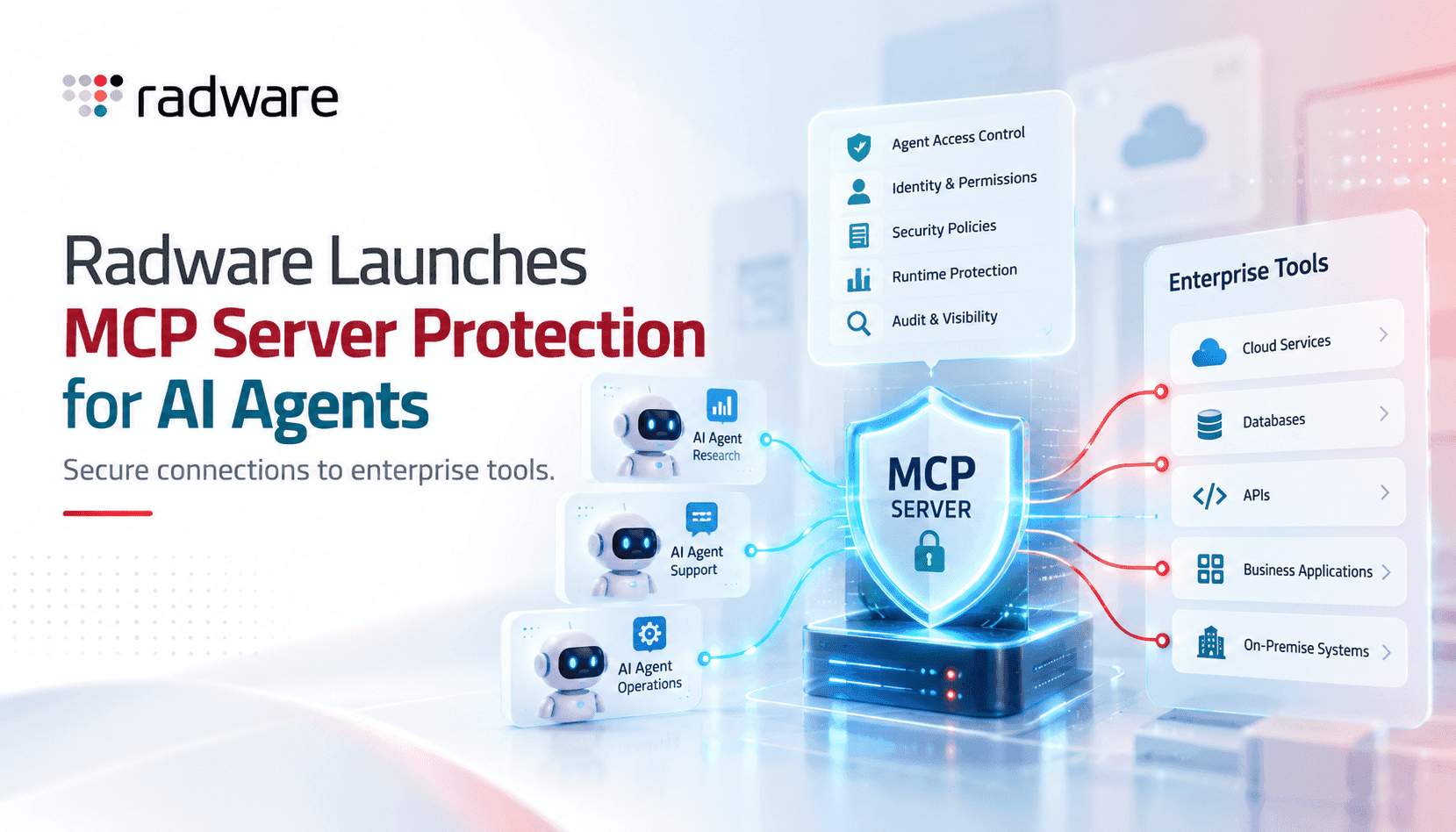
Enterprises are rapidly wiring AI agents into their application and data estate using the Model Context Protocol to expose tools, connectors and workflows. That connection layer is now a strategic point of control: it mediates what agents can discover, call and return. Radware’s MCP Server Protection acknowledges this shift by treating the MCP server as a first-class security surface. For security and platform teams, that reframes the problem from protecting web servers and APIs to protecting the protocol and the orchestration logic that allows agents to act autonomously against business systems.
The risk profile around MCP is distinct. Tool poisoning—where an attacker injects malicious or manipulated tool definitions—can trick agents into harmful actions. Unauthorized actions occur when agents with legitimate access chains are abused to perform tasks beyond their intended scope. Malicious or compromised MCP servers themselves can route agent requests to attacker-controlled backends. Traditional WAFs and DDoS products lack the context to detect these protocol and behavior-driven threats, which is why MCP-aware visibility, behavioral detection and governance controls are rapidly becoming necessary features for enterprise security stacks.
Radware’s offering bundles three capabilities that matter operationally: discovery and mapping of MCP servers and exposed tools, protocol-aware protection to block abuse patterns, and governance controls for policy enforcement. By logging agent identities, tool invocation sequences and resource consumption, it lets defenders move from ad-hoc monitoring to trend-based anomaly detection. For platform owners, the value proposition is both defensive and operational: identify which tools are reachable, which agents are most active, and where policy gaps allow escalation or data leakage.
Adoption trade-offs are real. Adding MCP security introduces latency, new telemetry streams, and configuration overhead across clouds, Kubernetes and on-prem hardware. Teams must balance blocking aggressive agent behavior with preserving legitimate automation. Practical success depends on phased rollouts: inventory and visibility first, baseline behavior analytics second, and active blocking later. Integration with identity, secrets management, and CI/CD for tool definitions reduces false positives and ensures MCP policies align with developer workflows.