

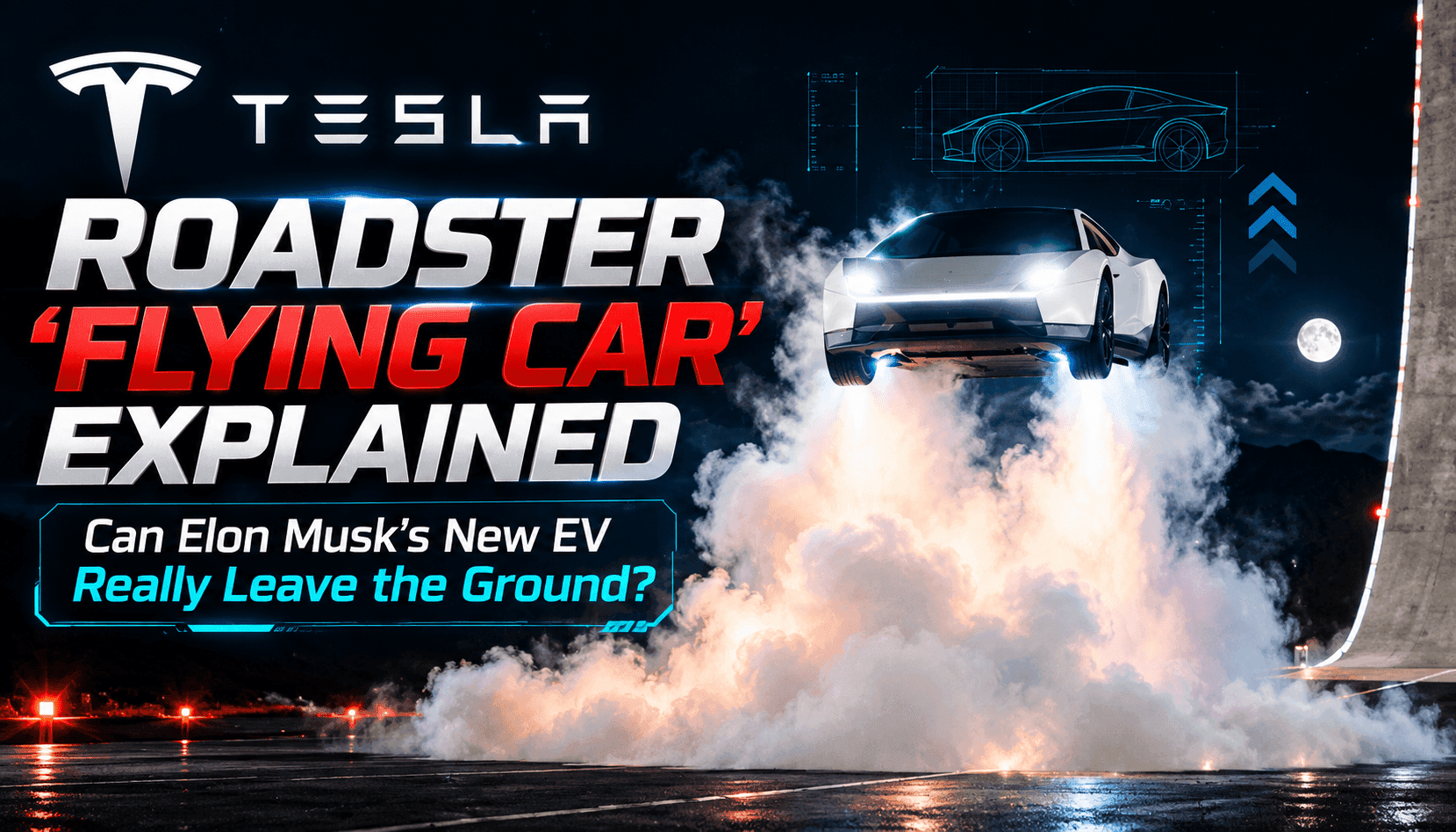
Tesla’s October reveal mixed demonstrable engineering with showmanship. The new Roadster used multiple high-pressure nozzles and short-burst thrust to climb ramps, hang inverted for seconds, and execute hops over parked vehicles. Those demonstrations indicate powerful transient thrust and precise control authority for brief maneuvers, but they do not equate to sustained, controllable flight. The physics of creating lift for a road-capable, crashworthy, two-seat vehicle—while also preserving range and usability—remains the central challenge.
Engineering a road-legal vehicle that meaningfully flies requires different trade-offs than a high-performance ground car. Aircraft demand low weight, distributed lift, and redundant flight controls; cars require crumple zones, bumpers, and occupant protection that add mass. Tesla’s approach—high-pressure air jets integrated into a vehicle designed primarily for road performance—leans toward short-duration hops and aerodynamic augmentation rather than sustained cruise. That difference shapes realistic expectations for owners, regulators, and investors.
This article evaluates the demonstrable subsystems (nozzle design, high-pressure air storage, thermal management, control software) and contrasts them with missing elements for genuine aerial operation: continuous energy supply for lift, distributed propulsion for redundancy, certified flight controls, and an airworthiness framework. It concludes with practical guidance for stakeholders assessing Tesla’s claims: what to believe today, what to expect by 2028 if production targets hold, and what would need to change for the Roadster to be an authentic step toward personal aerial mobility.
For engineers and technical buyers, the most valuable takeaway is where investment and research should focus: energy-dense storage compatible with crashworthiness, thermally resilient high-pressure systems, robust transition controls between ground and air regimes, and early engagement with aviation regulators. For investors, the short-term play is performance EV differentiation; the long-term bet hinges on breakthroughs in propulsion energy density and a clear certification path.