

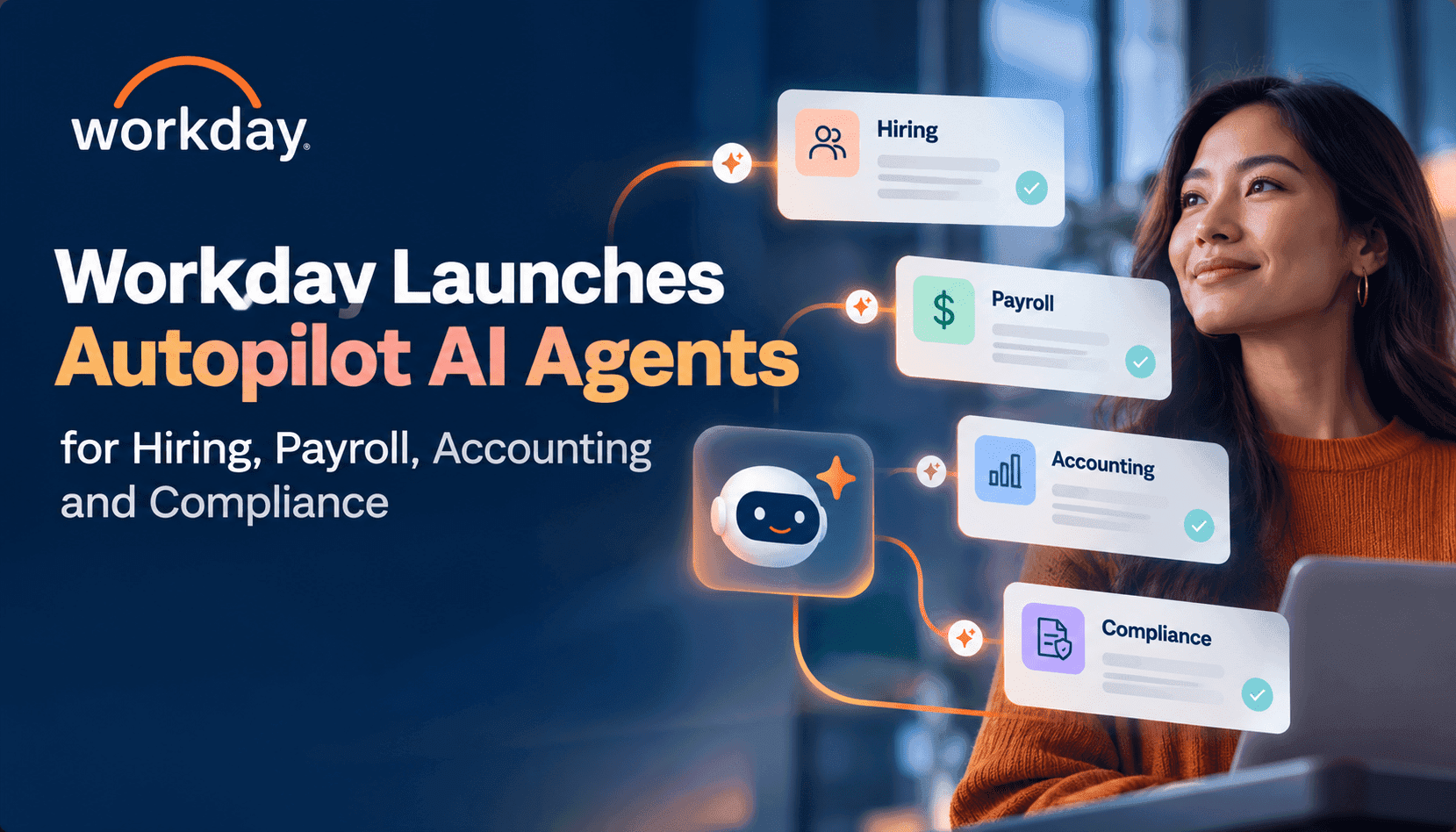
Workday’s Autopilot Agents change the operational dynamic for HR, finance and IT teams by moving routine, repetitive work from manual checking or on-demand AI prompts into continuous background processes. Instead of waiting for a recruiter or accountant to ask, agents proactively monitor queues, validate data, and prepare or execute actions where organizational policy allows. For enterprise operators this reduces the cognitive overhead of repetitive checks, but raises new questions about control, auditability, and how teams should adjust workflows to capture the productivity upside without exposing the business to undue risk.
Each agent targets a concrete operational pain point: Talent Acquisition finds qualified candidates and drafts outreach for recruiter review; Payroll spots missing pay data and flags out-of-bound retro adjustments before runs; Accounting continuously tests financial controls and drafts journal entries pending human approval; Deployment recommends and stages new Workday features for faster releases. The common thread is not capability alone but governance: Workday ties every autonomous action to an organization’s existing permissions, approval chains and policy rules so agents can act only where the customer has explicitly allowed it.
Operationalizing autopilot agents requires orchestration and observability. Workday’s Sana engine coordinates multiple agents, decides when to escalate to humans, and maintains action logs. For integrators and ops teams the practical implications are clear: configure guardrails, set run frequencies to balance cost and value, and define review thresholds where human judgment is non-negotiable. Early adopters should also adjust SLAs and team roles so humans focus on exceptions and decisions rather than routine checks, and so auditing and compliance processes account for agent-originated changes.
Finally, the market implication is that enterprise AI is graduating from suggestion engines toward outcome-driven automation. That changes procurement, metrics and risk models. Buyers should ask vendors for transparent logs, explainability around why an agent acted, and configurable approval flows. Investors and operators will judge vendor differentiation by how tightly agents embed into enterprise governance and by the measurable time and cost saved from continuous monitoring and remediation versus periodic, human-triggered processes.