

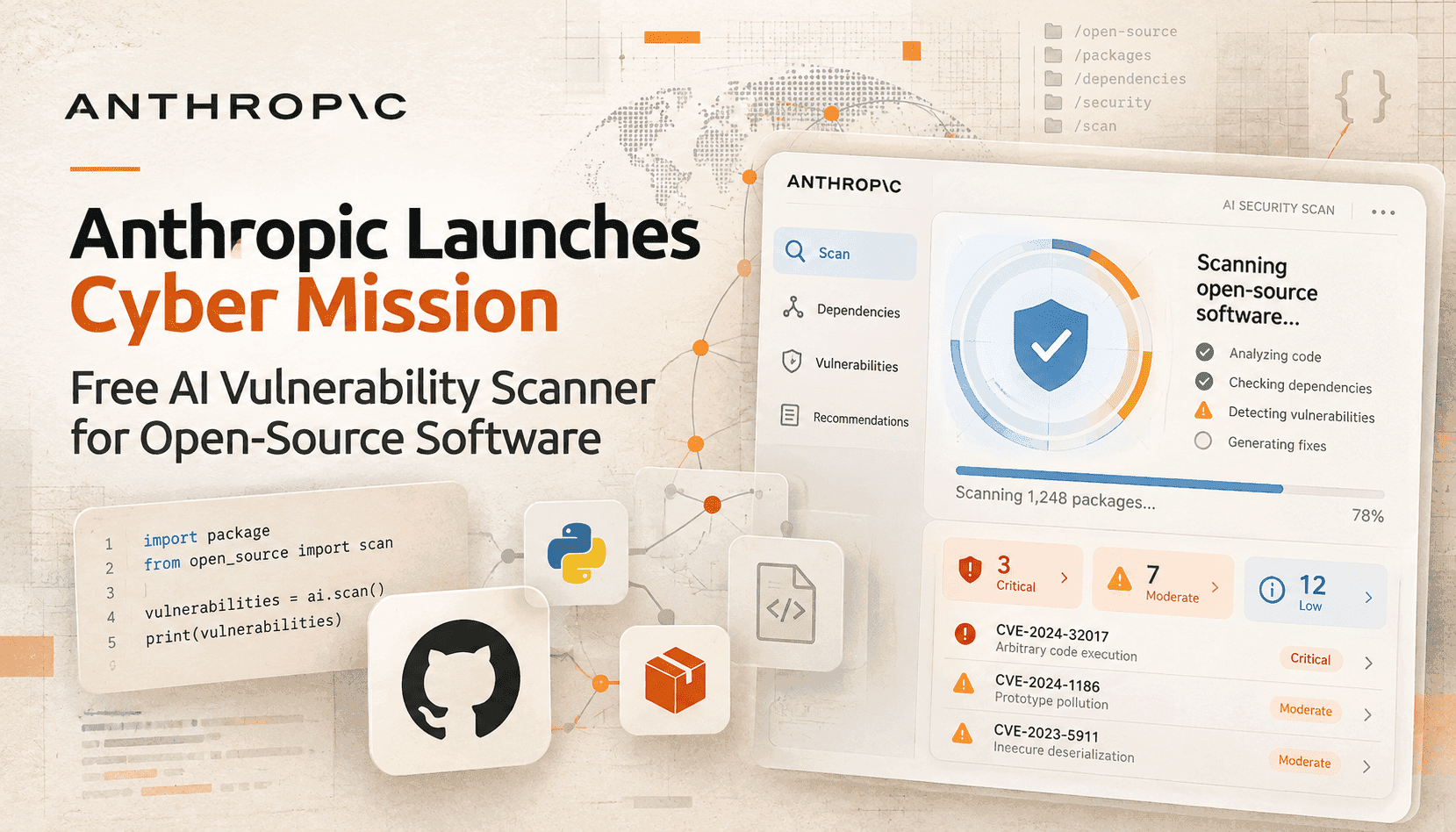
Anthropic’s announcement reframes an important question in cybersecurity: how to harness frontier generative models for defensive work without accelerating misuse. The Cyber Mission delivers two concrete offerings. OSS Scanner provides periodic, model-produced vulnerability reports directly to enrolled open-source projects, including proofs of concept and suggested patches — reports that are intentionally sent without human review to prioritize speed. Meanwhile, the Critical Infrastructure Defense Program (CIDP) brings models, threat research, and on-site engineering through a group of established OT vendors and security providers to help harden power grids, water systems, and transportation networks.
For open-source maintainers, the promise is immediate: findings at machine cadence, paired with suggested fixes, can drastically shorten the time from discovery to remediation. Anthropic expects a true-positive rate above 90% and will continue improving fix quality. But unreviewed, model-generated reports change maintainer workflows: teams must triage more, verify exploitability faster, and integrate automated or semi-automated patch pipelines. Projects that can’t absorb a higher alert volume are advised to remain on human-verified disclosure tracks — Anthropic will continue coordinated disclosures through its established program.
Operational technology (OT) environments introduce different constraints and stakes. CIDP’s collaborators — a mix of integrators, security firms, and equipment manufacturers — are the trusted intermediaries operators rely on to apply fixes safely. Anthropic’s approach is pragmatic: start with a small cohort, learn how models integrate into existing OT triage and change control processes, and scale selectively. The program recognizes OT realities: long-lived devices, limited maintenance windows, and the severe consequences of an incorrect or ill-timed patch.
The broader implication: defense can move at machine speed too, but only with new verification layers. Model-generated findings accelerate discovery but also create verification bottlenecks and potential false positives that may waste scarce maintainer time or, worse, trigger premature patches in fragile OT systems. Organizations that take advantage of these tools will need updated playbooks for triage, automated testing, prioritized rollout, and legal/coordination practices for sharing unvetted vulnerability data responsibly.